
ASAR FemCare™
Women's Health, Fertility & Advanced Gynaecological Care in
India
Connecting women and couples with trusted fertility specialists, advanced gynaecological surgeons and leading women’s healthcare centres across India.
Welcome to ASAR FemCare™
ASAR FemCare™ is ASAR’s dedicated programme for fertility, reproductive medicine, advanced gynaecology, and continuing women’s healthcare.
Fertility and IVF are an important part of the programme, but FemCare extends beyond assisted reproduction. It also supports women seeking specialist opinions, advanced gynaecological procedures, virtual consultations, menopause support, and reliable health information.
Our role is to help patients navigate available options, connect with appropriate doctors, and coordinate care before, during, and after treatment.
Women's Health at a Glance
- 1 in 6 people worldwide experience infertility during their lifetime.
- An estimated 190 million women of reproductive age are living with endometriosis globally.
- An estimated 10–13% of women of reproductive age have polycystic ovary syndrome (PCOS), while up to 70% may remain undiagnosed.
- Breast and cervical cancer remain among the leading cancers affecting women in India.
“Note: figures above are commonly cited global estimates (WHO/related sources). Confirm exact source, year and wording before external publication. “
Why Women Travel for Treatment
Women generally travel for healthcare when they require specialist expertise, advanced technology, faster access to treatment or procedures that may not be readily available locally.
Fertility, IVF and Reproductive Medicine
Fertility treatment is tailored to each patient, with many seeking specialised care, advanced techniques, and expert second opinions.
Endometriosis and Fibroid Treatment
Endometriosis, fibroids, and pelvic pain may require specialist care, second opinions, and fertility-focused treatment options.
Advanced Gynaecological Surgery
Minimally invasive procedures can support faster recovery and less discomfort, with options tailored to each patient.
Why Choose India for Women's Healthcare?
India offers an established network of fertility centres, women’s hospitals, and advanced multispecialty institutions, many of which see a high volume of complex cases each year experience that matters for conditions like deep endometriosis or recurrent IVF failure, where outcomes are closely linked to how often a team performs a given procedure.
Patients may benefit from:
- Experienced fertility and reproductive medicine specialists : many trained or credentialed internationally, treating a high volume of both routine and complex cases.
- Modern IVF and embryology laboratories : with environmental controls and protocols aligned to international standards.
- Advanced laparoscopic and hysteroscopic surgery : minimally invasive as a default approach where clinically appropriate, not just for straightforward cases.
- Robotic-assisted gynaecological procedures : available at a growing number of centres for complex anatomy.
- Fertility-preserving treatment approaches : surgical and medical teams that plan around fertility goals rather than defaulting to the most invasive option.
- Multidisciplinary clinical teams : gynaecology, oncology, endocrinology, and embryology working together on complex cases.
- Advanced imaging and pathology : supporting accurate diagnosis before treatment begins.
- Virtual consultations before and after travel : reducing the number of in-person visits required.
- Dedicated international patient services, including language support, care coordination, and a single point of contact.
- Competitive treatment costs and shorter waiting periods relative to several other international destinations, though this varies by procedure and centre.
“Note: cost/waiting-time claims should be quantified against a named comparator (e.g. specific country, procedure, year, source) before use in client-facing or investment materials. ‘Internationally credentialed’ and ‘aligned to international standards’ claims should name the specific accreditation (e.g. JCI, NABH) per centre rather than being stated generically.”
The right centre should be selected based on specialist expertise, treatment suitability, clinical infrastructure, and patient needs not cost alone. A lower price at a less experienced centre is not a saving if it increases the chance of a second procedure, a failed cycle, or a longer recovery.
It’s also worth being clear-eyed about the trade-offs: travelling for care means managing logistics, time zones, and follow-up from a distance, and not every condition or procedure benefits from travel. Part of ASAR FemCare’s role is helping you work out whether travel is the right choice at all, not just where to go if it is.
Women's Health Services We Support
Fertility and Reproductive Medicine
Fertility assessment, IVF, ICSI, egg freezing, fertility preservation and review of previous treatment.
Advanced Gynaecology
Specialist care for endometriosis, fibroids, ovarian cysts, adenomyosis and complex benign gynaecological conditions.
Minimally Invasive Surgery
Laparoscopic, hysteroscopic and robotic-assisted procedures where clinically appropriate.
Gynaecological Oncology
Access to multidisciplinary specialists for the evaluation and treatment of women’s cancers.
Virtual and Continuing Care
Online consultations for hormonal health, PCOS, menopause, menstrual concerns, second opinions and post-treatment follow-up.
Women's Health Education
Doctor-led webinars, treatment guides, health articles, procedure checklists and patient resources to support informed decision-making.
How ASAR FemCare™ Helps
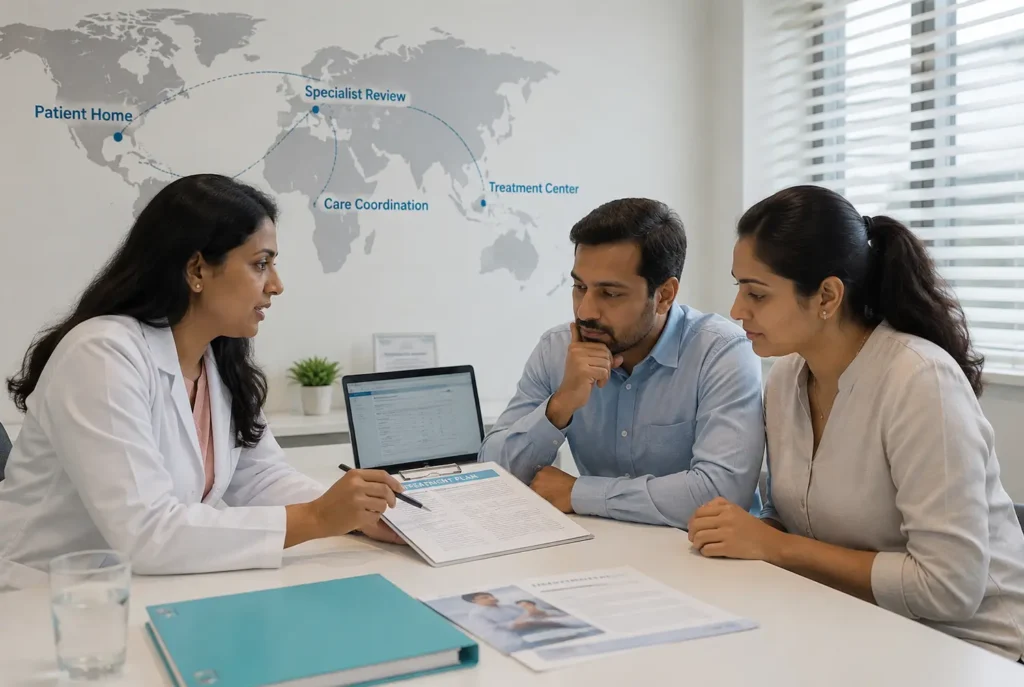
Coordinating care across borders involves more moving parts than most people expect – medical records, specialist matching, logistics, and follow-up all have to work together. ASAR FemCare’s role is to manage that coordination so the patient can focus on the clinical decision, not the administration around it.
Before Treatment
This is usually the longest phase, and the one where the most important decisions are made before any commitment to travel.
- Medical record organisation : Collecting and structuring existing reports, imaging, and medical history for specialist review.
- Specialist and centre matching : Based on diagnosis, required expertise, and patient preference, not a single default option.
- Online consultations : Direct conversations with the specialist before deciding on treatment.
- Second-opinion coordination : An independent clinical view where the patient wants one.
- Preliminary treatment plans and estimates : So the patient understands the likely process and cost range before travelling.
During the Treatment Journey
Once a decision to travel is made, the focus shifts to logistics the practical details that, left unmanaged, add stress at exactly the point a patient needs to be focused on their treatment.
- Appointment coordination : Scheduling across consultations, procedures, and any required testing.
- Medical visa guidance : Supporting the documentation process for medical travel.
- Travel and accommodation support : Practical arrangements suited to the treatment timeline and recovery needs.
- Communication with hospitals and fertility centres : A single coordination point rather than the patient managing multiple contacts directly.
- Dedicated international patient assistance : On-the-ground support for language, logistics, and day-to-day questions.

After Treatment
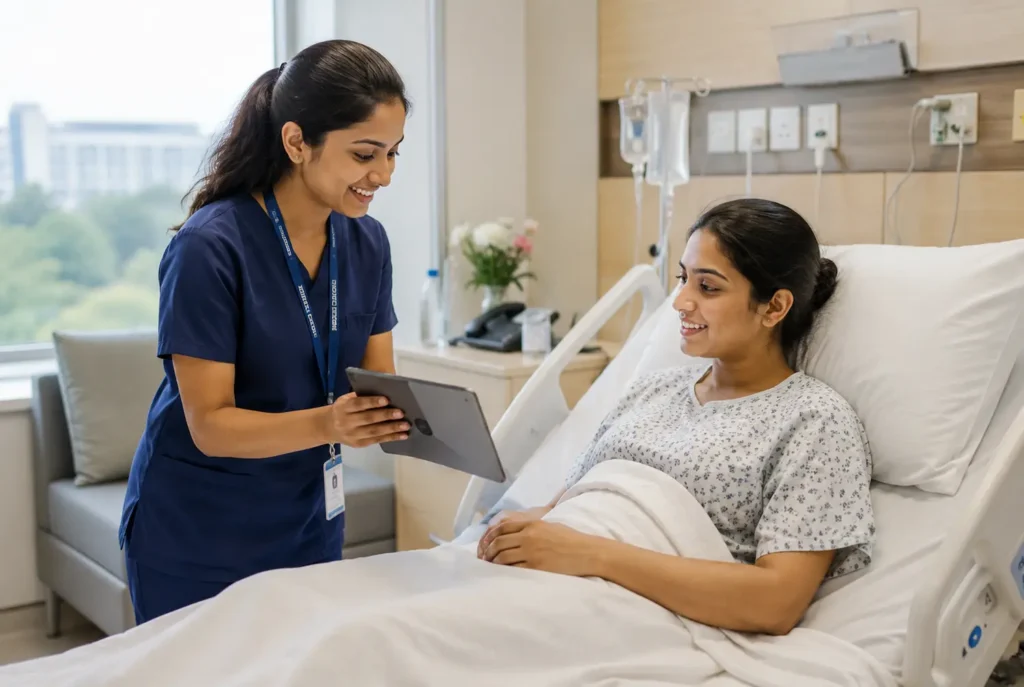
Care coordination doesn’t end at discharge. Many procedures particularly fertility treatment and cancer care require structured follow-up, and losing continuity after returning home is a common and avoidable problem.
- Follow-up consultation coordination : Scheduling review appointments, including virtual consultations where appropriate.
- Treatment-record support : Ensuring medical records are available to the patient’s local doctors.
- Communication with the treating team : Keeping a channel open for questions that arise after returning home.
- Continuity of care after returning home : Helping the patient’s local healthcare provider stay informed.
Why Choose ASAR FemCare™
Women-focused healthcare navigation
Access to fertility and gynaecological specialists
Support for virtual and travel-based care
Personalised centre and specialist matching
Transparent treatment coordination
Educational resources and webinars
Dedicated support throughout the care journey
One coordinated point of contact
Our Women's Health Network
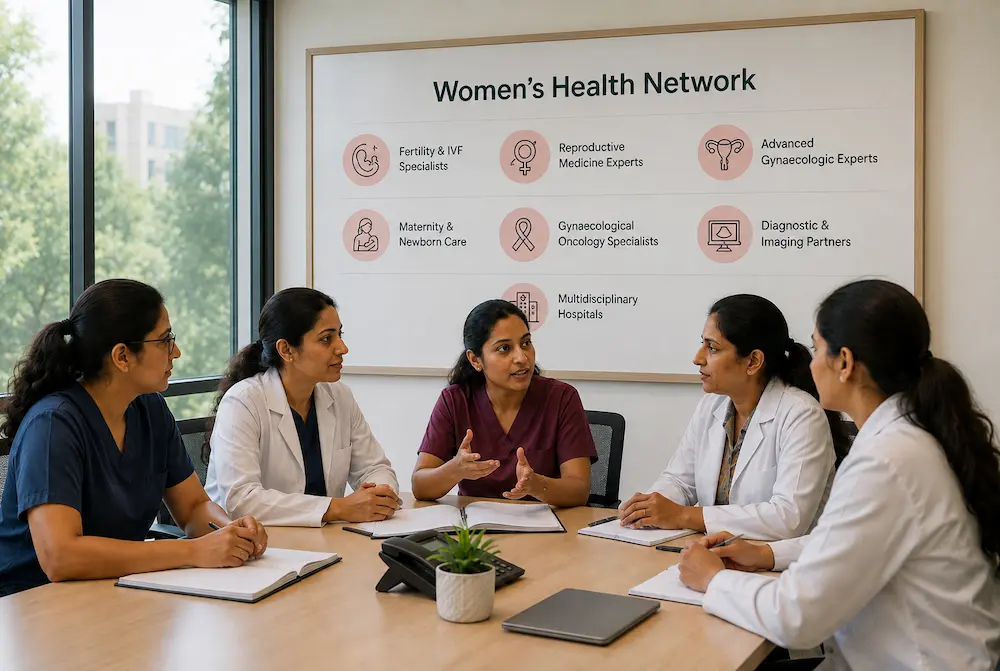
ASAR works with selected fertility centres, women’s health specialists, and multispecialty hospitals across India.
Our network may include:
- Fertility and IVF centres.
- Reproductive medicine specialists.
- Advanced gynaecological surgeons.
- Minimally invasive and robotic surgery teams.
- Gynaecological oncology specialists.
- Diagnostic and imaging centres.
- Multidisciplinary hospitals.
Recommendations are made according to the patient’s diagnosis, required expertise, treatment preferences, and practical needs.
Frequently Asked Questions
No. IVF and fertility are important parts of the programme, but FemCare also supports advanced gynaecology, surgical second opinions, menopause care, virtual consultations and women's health education.
Yes. ASAR can coordinate online consultations and second opinions before you decide whether travel is required.
Travel may be relevant for IVF, fertility preservation, complex endometriosis, fibroids, ovarian cysts, advanced gynaecological surgery and cancer care.
Selection is based on the patient's diagnosis, specialist expertise, available technology, treatment approach, centre quality and practical requirements.
ASAR can support medical visa guidance, appointments, accommodation and communication with the selected healthcare provider.
Yes. ASAR can coordinate virtual follow-up consultations and help patients remain connected with their treating team.
