
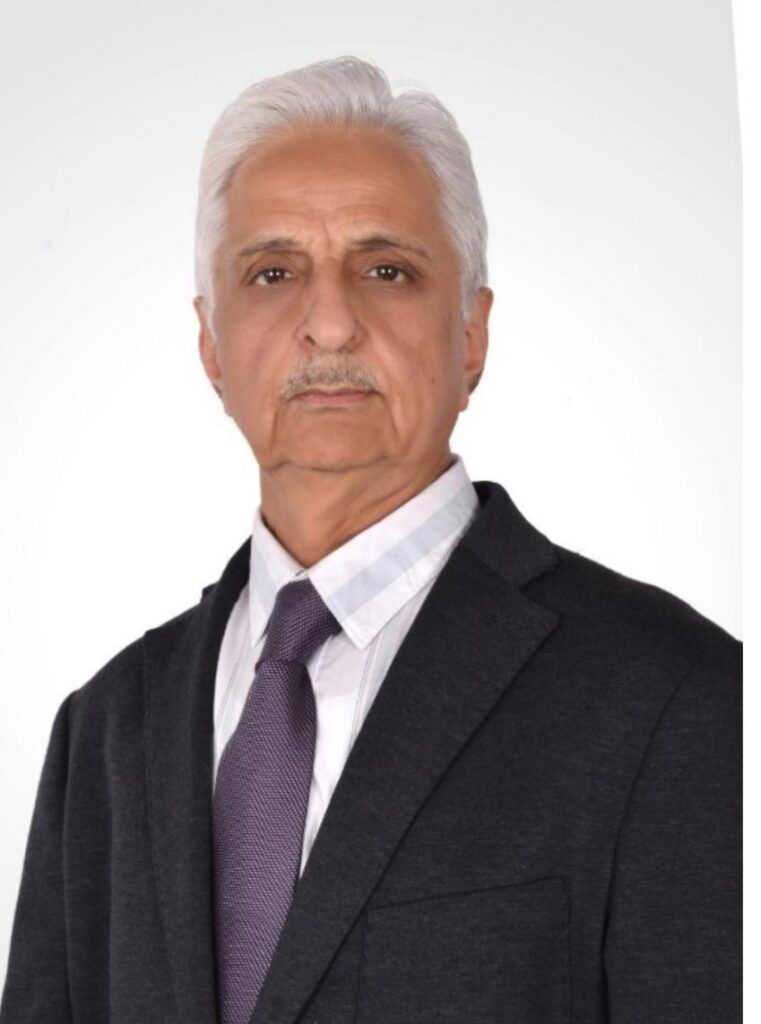
Dr. Anil Kumar Anand
Principal Director & Head, Radiation Oncology
- Hospital-Affiliated Specialist
- 20+ Years of Experience
- Fortis Healthcare, India
Trusted by 15,000+ international patients | Available within 48 hours
About Dr. Anil Kumar Anand
Dr. Anil Kumar Anand is a senior radiation oncologist and Principal Director & Head of Radiation Oncology at Fortis Cancer Institute, Fortis Memorial Research Institute, Gurugram.
With more than four decades of clinical experience, he specializes in advanced radiotherapy for Head & Neck cancers, Prostate cancer, Brain tumors, Stereotactic Radiosurgery (SRS), and Stereotactic Body Radiotherapy (SBRT).
His international training includes the Commonwealth Medical Scholarship in the United Kingdom for specialized radiotherapy training in Head & Neck cancers and the prestigious Nargis Dutt Foundation Fellowship in New York for specialized training in Brachytherapy.
Dr. Anand has authored more than 50 publications in national and international indexed journals and is widely respected for his multidisciplinary and patient-centric approach toward cancer treatment.
Trusted by Patients Worldwide
Patients from across the globe trust ASAR Care for safe, transparent, and well-coordinated treatment journeys in India.
“The language support and personal care coordinator made me feel at home. My surgery was successful and the follow-up continues.”
“I saved over 70% compared to treatment costs in my country, with the same world-class quality. Highly recommend!”
“ASAR Care made my cancer treatment journey seamless. From visa to recovery, everything was handled professionally.”
“I underwent MR-Linac radiation for prostate cancer with Dr. Anil Anand at Fortis Hospital. The targeted treatment meant minimal side effects and a smooth recovery. Highly recommend!”
- Rajeev A.
“MR-Linac at Fortis Gurgaon with Dr. Anil Anand and his team is the way forward for prostate cancer. Their care is world-class, experienced, and deeply humane. Highly recommend!”
- Patient Attendant.
“I traveled from Kiribati for MR-Linac radiation treatment. It was completely pain-free, comfortable, and delivered exceptional results. I feel so much better physically and emotionally!”
- Tutapua.
“We traveled from Zambia with very little hope, but the treatment and care at Fortis were outstanding. After successful surgery and therapy, the recovery has been remarkable. We are truly grateful!”
- Betha K.
Advanced Cancer Treatment in India
<div class="dp-transcript-content"> <p>ADVANCED CANCER TREATMENT IN INDIA, EXPLAINED</p> <p>Asar Care | Oncology Podcast with Dr. Anil Anand, Radiation Oncologist, Fortis Gurugram</p> <p>Host: Suhani Khanna | Full transcript</p> <p>Educational content, reviewed by Dr. Anil Anand. Not medical advice. Please consult a qualified physician about your individual case. Outcomes vary from patient to patient.</p> <p><span class="dp-transcript-time">00:02</span> <strong>A DIAGNOSIS THAT CHANGES EVERYTHING</strong></p> <p>Every year thousands of people receive diagnosis that changes everything and then they take a decision to come to India for fighting chance. I'm here with a circuit that brings world-class medical treatment within the reach of patients who are travelling across countries for the right treatment.</p> <p>Today we are going to sit down with Dr. Anil Anand and a senior oncologist at Fortis Hospital, Gurugram, India help us navigate that why India is becoming a sole and very appropriate destination to fight cancer. Let's get into it. Thank you so much for sitting down for this podcast, Dr. Anil and it's an honour hosting you here with Asar Care.</p> <p><span class="dp-transcript-time">00:56</span> <strong>WHAT PATIENTS ARRIVE WITH</strong></p> <p>So, as we proceed further with this podcast, I want to know if somebody is diagnosed today and it's 2am at night and the scrolling through Google trying to understand what cancer actually is and what they have been diagnosed with. Where you sit today, what is something that patients come with, the stories that they come with and how big is this issue globally right now.</p> <p>So, thank you for inviting me over. So, the issue which we are raising is that somebody has been diagnosed with a cancer anywhere in the world. And so, it is always a news which is least expected and patient and family obviously is in a distress about the disease. So, when we see patients who come from abroad to us as a medical tourism and they want to explore the other avenues of treatment, offer the stories we hear is that first they go to some place depending on the local medical expertise.</p> <p>So, sometime the symptom which they have for example, somebody has a hoarseness of voice. Okay. And he's just going from one ENT surgeon to another and somebody may give some treatment without much benefit. And many times it is not suspected that it is a cancer because symptoms of cancer and other diseases overlap.</p> <p>So, they don't know. So, many times I have depending on the expertise again I say in different countries, this diagnosis delayed because they keep on getting some treatment or the other ways, weeks and months. So, often time we see patient has been seeking the consultation for weeks and sometime in two, three months, six months, often time we see six months to one year lag between the symptom and the detection of cancer.</p> <p><span class="dp-transcript-time">02:57</span> <strong>WHY A DELAY CHANGES THE OUTCOME</strong></p> <p>And if somebody if there are two people who have been diagnosed with the same cancer at the same time but one of them delays the you know treatment for it by even a day or two or weeks, how will the outcome look for them differently. So, obviously it is very different because there are many cancer obviously the cancer is grow with time. So, initially everybody has stage one, then if you don't get treated then it progresses to stage two, stage three, stage four and it's all time dependent.</p> <p>So, earlier you diagnose is a high possibility that you will be detected in an earlier stage, say for example stage one or stage two. Now, in that stage it is much more curable than a person in stage three, four cases. Absolutely. So, time is of essense, time is very crucial. And have you ever seen that there are patients who took action at the right time, but it was the wrong treatment. So, what is the outcome for that.</p> <p>So, this also we see quite often mostly in countries where the medical facilities are not as up to date, but even in our country we see the diagnosis is sometime delayed and sometime, you know it is not suspected the other day I saw a patient with hoarseness of voice going from one doctor to another for a long period of time before somebody said no, put in a scope and see and take a biopsy. So, this kind of situation is actually quite common.</p> <p>So, as I said, cancer symptoms and other symptoms overlap sometimes it is very difficult to differentiate. So, the thing is any symptom which doesn't go in two to four weeks, you should consult a specialist. So, time period we should not delay for two, one, three, months, five months then obviously the disease is diagnosed late.</p> <p><span class="dp-transcript-time">05:03</span> <strong>THE RIGHT TIME BUT THE WRONG TREATMENT</strong></p> <p>Absolutely. And when someone hears you have cancer, their entire world shatters at that point, right. And it suddenly you know they are doctors give them some multiple treatment options, what is going through their mind at that given time and how much the first step that they take at that given point will affect the outcome.</p> <p>So, when the naturally if there is suspicion you go to a surgeon or somebody he does a biopsy and when the biopsy comes positive, then it is a very crucial time. And this is the most crucial time to detect the disease number one to stage the disease. We must know the correct stage and then we should know what is the correct treatment.</p> <p>So, at a high level I can tell the three pillars of cancer treatment are surgery, radiation and chemotherapy. And a given patient may need one modality, maybe he needs surgery, plus radiation or he may need no surgery, sometimes so many cancer be treated without surgery. So, he gets radiation along with chemotherapy or without chemotherapy and there are some cancer which are only treated by chemotherapy.</p> <p>So, it is not the same treatment for everybody. So, it depends from cancer to cancer , stage to stage. So, it is a so when you are diagnosed the first thing is the obviously where to get the treatment and the second is how best to exploit the expertise, which is so important so that we detect the disease early and we get the most appropriate treatment.</p> <p><span class="dp-transcript-time">06:38</span> <strong>THE THREE PILLARS: SURGERY, RADIATION, CHEMOTHERAPY</strong></p> <p>So, ask my previous question I asked from you that if it is the right time but the wrong treatment. So, can you share any stories with us if you have that they were given the right time treatment but the treatment was wrong. So, we would say that treatment was completely wrong treatment is sometimes suboptimal.</p> <p>So, it is so for example, if somebody has a rectal cancer. So, in a smaller place where there is the multi specialty cancer management is not available. Some surgeon will do a kind of a very small surgery. He will just remove the rectum without doing a cancer surgery. Cancer surgery is very different from ordinary surgery from general surgery.</p> <p>So, he will just remove the disease without seeing its spread. So, what a cancer surgeon will do? He will do the staging, he will find out where all the cancer has gone, he will resect that. So, and many times surgeon may refuse then he say no first you get radiation and chemotherapy, and then I will operate.</p> <p>So, therefore, it is very very essential. I have seen many time patients coming with some optimal surgery, means the inadequate surgery. We have seen in cancer cervix in women that patient has bleeding in her vagina and somebody has done a hysterectomy. So, the cervix is still inside. So, this we see very common especially in semi rural areas and smaller cities. So, we have quite a lot seen the patient getting a suboptimal surgery.</p> <p><span class="dp-transcript-time">08:13</span> <strong>HOW ADVANCED PATIENTS ARRIVE FROM ABROAD</strong></p> <p>And when patients come from abroad to you for their treatment, how advanced is their cancer and what exactly is the gap in that country? So, same thing we see from other developing countries, some Africa and maybe some of the Central Asian countries and other countries here are etc.</p> <p>So, there we see that you know the there is a good amount of time lag between the detection of the cancer and start of the treatment. So, there is a delays at various places somewhere there is a long appointment somewhere they do not have all the facilities sometime the biopsy is done which is inadequate.</p> <p>So, they go for another biopsy and then the time gets wasted in these many months. So, therefore, what we see when the patient comes from abroad to India from many countries Southeast Asia Middle East and other Central Asia or maybe Africa and we get a lot of patients from Bangladesh, Nepal.</p> <p>So, there we see that you know there is a considerable delay and most of the patient come with advanced stage of their cancer. So, the our this thing never should be, if they these patients have a suspicion they get diagnosed they can reach out to you know good medical tourism companies and people who can help them to get a better opinion from other countries and others doctos & other hospitals.</p> <p>So, it is very very essential to seek opinion and to seek the advice early on in the disease not very late early on means within two to four weeks not two months six months and things like that. So, that delays the treatment and the outcome is also poor.</p> <p><span class="dp-transcript-time">10:14</span> <strong>AFFORDABILITY VERSUS QUALITY IN INDIA</strong></p> <p>Certainly and that's when I believe patients start looking beyond borders as well right and when we talk about patients, So, when they come to India expecting affordability primarily what ends up surprising than the most. So, what I would say that people are coming right now they contact few people in their own country and they are in their journey to India. I think the affordability in India is much better compared to many other countries in the world.</p> <p>So, if you see the treatment for example, in the United States is at least 10 times more expensive it's not two three times it is 10 times Europe etc again and then even in countries like Singapore and others is three to four times more expensive. So, India is in a unique position to offer services medical services to people coming from various countries because it is very affordable in India compared to other countries.</p> <p>Not only affordable the technology is good there is there is no dearth of doctors here, well trained medical professional, doctors paramedic staff and now we have a large amount of corporate hospitals which can offer a very good quality treatment. So, affordability with effective treatment.</p> <p>So, what I say the affordability with quality! absolutely quality has to be delivered care has to be delivered and what we should, we all try to give them a good quality of life along with the freedom from cancer.</p> <p><span class="dp-transcript-time">11:59</span> <strong>IMRT, IGRT AND PRECISION RADIATION</strong></p> <p>We hear terms like IMRT, IGRT, proton therapy for a patient who's these actually change outcomes. Yeah, so as we have been discussing is the unique mix of a good doctor. He should be, he should have access to good technology a good doctor without good technology maybe handicapped, so he should have a good technology and it should all be located in a well equipped hospital.</p> <p>So, these are the three important points which should exist together and then we have these technologies like IMRT and IGRT as you're asking, now the these are radiation techniques. The main purpose of this IMRT((Intensity-Modulated Radiation Therapy), IGRT(Image-Guided Radiation Therapy) and VMAT(Volumetric Modulated Arc Therapy) is that we should direct radiation to the tumor very very precisely so that the normal organs around the tumor are not that much affected they don't get too many side effects so that if they are cured they should not suffer from intolerable side effects.</p> <p>So, in this the guide I must say in India, we have now another very advanced technology called a MR-LINAC(Magnetic Resonance Linear Accelerator).</p> <p><span class="dp-transcript-time">13:19</span> <strong>THE MR-LINAC EXPLAINED</strong></p> <p>So, in our hospital for this is the second hospital in the country to have this equipment called MRI(Magnetic Resonance Imaging) guided radiation therapy because MRI(Magnetic Resonance Imaging) as many people would know there is a very very important diagnostic technique to know the extent of the tumor to diagnose tumor well.</p> <p>So, to see the full extent of the disease and then direct the treatment very precisely. So, this machine is called MR-LINAC(Magnetic Resonance Linear Accelerator) the name suggests if say hybrid machine it has got two machines in what the inside is MRI(Magnetic Resonance Imaging) to diagnose the tumor to see the tumor and the outside there is a big gantry which delivers radiation is called linear gantry.</p> <p>So, it is a hybrid machine of two technologies MRI(Magnetic Resonance Imaging) and linear accelerator. I understood and how many patients have been treated on this machinery and how many have actually recovered from it. So, up till now we have treated about 300 patients and all of the patients have done pretty well in fact the success rates on this machine are far above what are seen on the conventional machines.</p> <p>And that is why most of our patients do much better, they have fewer side effects and better treatment outcomes as well. Please walk us through the technology of the machine reads. Yeah the difference between this linear accelerator and the conventional linear accelerator there for imaging we use CBCT.</p> <p>In Cone Beam CBCT XM(Cone Beam Computed Tomography with a Bow-Tie Filter (X) and Medium Field of View (M)) machines X-rays are used, whereas here, there is no X-ray for the imaging and the quality of the image which we get in the conventional linear is far far superior in this MR(Magnetic Resonance).</p> <p>Because MR(Magnetic Resonance) image always give a better soft tissue contrast you will be able to visualize all the internal organs and all soft tissues in a well established manner. So, that is the biggest advantage that is all the results are also very promising because we are able to find out observe the variations, various daily variation and since we are able to obtain manipulates our organs structures or we can predict the organ structure on the daily basis that we can treat, also on the specific day what exactly the accurate dose that we will be able to deliver compared to our conventional machine.</p> <p>That is the biggest advantage of this. So, this technology is not widely available so we are lucky to have here this is the second machine in India and we installed it in August of 2024 and so far we have treated more than 300 patients and the degree of satisfaction of patient is high and our expectations are also met - the one we wanted to drastically reduce the side effects.</p> <p>So, this is a very high class technology for delivering very precise radiation therapy.</p> <p><span class="dp-transcript-time">16:15</span> <strong>"IF I HAD COME EARLIER"</strong></p> <p>And do you often see patients who feel that if I would have come earlier it would have been cured precisely. Of course, they realize slowly we do not say that because it is very demoralizing. Absolutely. But slowly and slowly I have seen many times when patient goes through everything and then he says doctor do you think I would have been better if I have been diagnosed Earlier?</p> <p>So, they realize slowly so for my message is that if this is the realization and if people know that cancer spreads with time. So, therefore, we are running against time even the patient is even the doctor they all are running against the time so that we can diagnose and treat cancer as early as possible to minimize side effects and even to have better cure rates.</p> <p>And by the time patients reach you they are not just carrying reports they are carrying experiences and stories. What patterns do you see in what they have already been through. See its variable. So, we see people who have been running around for six months, one year ignoring some of the patients also ignore symptoms.</p> <p>They are ignoring symptoms and even they sometimes wait for six months and the other thing which is very detrimental is they start trying indigenous treatment like naturopathy or homepathy like we are not seeing they are not good branches of medicine. They have their own advantages but when it comes to cancer they do not have much to offer.</p> <p>They can offer in well-being and other things in yoga but treatment of cancer has to be perfect. So, therefore, I would say that earlier you get the treatment the better it is.</p> <p><span class="dp-transcript-time">18:18</span> <strong>DOES THE HOSPITAL BRAND GUARANTEE QUALITY?</strong></p> <p>And for the patients does the hospital brand is everything that they should actually rely on that is guaranteeing the same quality everywhere or does the team and location matter. So, as I said it is the three things together. It should be a well accomplished doctor, you should check the credibility of doctor, his educational background. Now a days Google can tell you everything where the doctor has been trained, what kind of exposure he has to high technology.</p> <p>Then, second is doctor should have access to very high technology. For example, robotics surgery or a MR-LINAC(Magnetic Resonance Linear Accelerator) other high technology equipment and access to good medical oncology. And not only this, we should have a combined kind of approach, combined means surgeon, radiation oncologists and medical oncologists should work together.</p> <p>Because, as I said, often times cancer treatment involves all three specialties or two specialties. So, it is not one doctor who is going to treat a patient. It is the multiple doctors one after the other who would need to pitch-in.</p> <p><span class="dp-transcript-time">19:28</span> <strong>WHAT THE JOURNEY TO INDIA LOOKS LIKE</strong></p> <p>Someone decides to come to India and actually start the treatment. What does that journey really look like? So, I would say before they come to India they should do a little bit of their homework. So, the one thing is diagnosed then you look for are there any well accomplished medical tourism companies who are kind of responsible people who can meet their demands in the sense that even at detection you should search who can help you further.</p> <p>And if this biopsy report has shown cancer, now what next? Should we do rest of the investigation in their own country or they have to travel to India? So, if they want to travel to India then they should collect all their documents. They should have access to the doctor in India much before their arrival.</p> <p>So, it is very important that the doctor will guide them, you collect your biopsy material,because we need not do the biopsy again. So, if they carry them or whatever test they had before because we can have a test which showed a disease in these earliest forms and when the patient comes here it is advanced.</p> <p>So, we have to know where it all started. So, all these documents they have to carry. They should have access to the doctor which are the prospective doctors from where they can get treatment. And therefore, the company like Asar Care for example. So, they can help them to connect with the doctor and the hospital and then they can plan their whole journey for the treatment.</p> <p>And what are the biggest mistakes you have noticed cancer patient makes before they arrive? Because mistake is late arrival, late means the disease has advanced far and wide. And when the local doctor says now you travel somewhere, it is too late.</p> <p><span class="dp-transcript-time">21:35</span> <strong>THE NON-MEDICAL STRUGGLES PATIENTS FACE</strong></p> <p>That is the biggest thing which we see. So, it depends on the stage, most of them they reach here but not in the right stage. So, if we can with this technology now we have audio visual and online we can easily even see their CT(Computed Tomography) scans and MRIs and guide them as early as possible.</p> <p>So, all these things we can minimize and they should come as early as possible which not only improves the cure rate. It improves the side effect, less side effects and even less cost. If you come in at an advance stage, first three or four weeks or five weeks are just spent on building you up, building your general condition.</p> <p>So, if you land in good general condition your cancer treatment can be started early and you can be free of cancer very early with least cost. And beyond treatment itself, what are the biggest struggles patient face during their time here? So, once you arrive in India now naturally you have a lot of issues because there is language problem.</p> <p>You know there may not know Indian language. Food problem, food is different from the food you get back home and you are use to. So, this kind of arrangement you have with the company then when you come here, then these people can take care of your food habits. So, we can have cook serving you the meals you want.</p> <p>Then we should have accommodation then somebody should accompany the local transport. Then they have to reach the hospital and then to the right doctor and then the battery of tests are advised. And then you have to change their report and then the treatment starts. So, it is a huge thing.</p> <p>So, therefore, if somebody is helping you a well coordinated team, if they are helping you then your problems can be reduced substantially. So, does their living situation or the people who are supporting them in their journey actually affect their treatment? Yeah, of course, because if you are being guided properly and reach the right person, right hospital wth right equipment, naturally It improves the outcome dramatically.</p> <p>So, does the recovery. Of course, the recovery. What we want in cancer is to avoid repeat treatment. What I want to say for example, somebody gets in adequate first surgery. So, that patient will always fare poorly because repeat surgery is not that easy and full of complications.</p> <p>And then also the cure will not be attained despite spending a lot of money. So, that is very very important that the first treatment in cancer should be the best treatment. And from your perspective, how important is it for a patient to have someone guiding them through their entire journey?</p> <p>Very very important and I feel that that person should start from even before you have left your country. So, he should contact you there, he should put you in contact with doctors in India, with the hospital in India. There is a to-n-fro in whatever information we want, we will tell you and then we will say okay now you are prepared to come here.</p> <p>So, the framework is already ready so that we do not waste time in unnecessary investigations and repeat investigations. You get investigation in your country and we say now you repeat it here. So, those repetitions involve cost and it was delays. So, one single point contact is very very important.</p> <p>Certainly and where does a hospital's role naturally end when it comes to a patient's overall experience? So, hospital is mainly responsible for doing the necessary treatment, making sure the recovery is good. Giving guidance about rehabilitation because in cancer you know some portion or parts of the body may have been removed.</p> <p>For example, in the rectum rectum is removed in voice box sometime when we give radiation and chemotherapy they have lingering hoarseness of voice or problem in swallowing. So, our job in the hospital is to make sure you recover from most of this side effect and then you go to your native country.</p> <p>But the very important thing is the hospital job should not end here. Hospital job should carry on even after you reach your country. Absolutely.</p> <p><span class="dp-transcript-time">26:30</span> <strong>WHY FOLLOW-UP AFTER GOING HOME IS THE WEAK LINK</strong></p> <p>And even after the treatment is done the job is not just ended there. So, how often does doctors and Indian patients that are with local doctors actually stay connected after the treatment? So, this I would say is the weak link. And medical tourism companies and people should put a lot of effort I feel more effort is needed for the post treatment care of the patient in their native country.</p> <p>Because in cancer once the treatment is finished there are follow up is very important. So, we will tell them to do follow up every three months for two years and then six months. And not only that we check the control of cancer but we also have to side by side manage any side effects which come up.</p> <p>Side effects can be due to the treatment and the side effects can be some of the side effects can be chronic side effect. Late side effect which patient may develop six months one year after they have left the country. So, if you are being handled by a good company and a good people then they will contact us back or frequently on a regular basis.</p> <p>So, maybe through audio visual or some method that we keep a check on patients follow up. If they have any problem we can guide from here. And sometimes small guidance can help in a big way. All these things we can diagnose remotely and guide them. some nutrition, some physiotherapy, some people feel depression Rarely that we have to call them over back again here too if there is something suspicious.</p> <p>But if we provide a good aftercare that is lacking I would say and anywhere in the world. Because everybody feels that treatment is over now my job is over but no it should continue. It is a long run. So, when a patient goes back home what does the next year really look like for them and where do they struggle the most.</p> <p>So, same thing as I just said they struggle the most because when they go back and they suffer from some side effects. So, for example somebody had kind of radiation chemotherapy and the swallowing is a problem. Then the simple swallowing exercises if somebody can get it support for them they can get over there.</p> <p>But if there is nobody to help then they suffer. So, if there is an audio visual consultations every two or three months we can always guide them. And we can even do a remote physiotherapy. Somebody in the audio visual can tell them how to do swallowing exercises, how to do lungs expansion exercise.</p> <p>If somebody had limb surgery how to put calipers and make that person mobile his gate can be improved. His appearance can be improved, his functions can be improved. So, all this the next year and year or two are not that easy. They have some side effect they have some morbidity we call and that has to be addressed by constant feedback with the doctor.</p> <p>In your experience have you ever come across any person or any stories that people were in a hurry to go back to their native places. And because of that that actually hampered their recovery. Plenty, Actually patient says that when is the radiation finishing I said on 16th. So, we have booked flight on 17th.</p> <p>So, they go so early. So, the thing is okay we staying here means more spending more money and more cost. But at the same time week or 10 days here & there should be built in. And then make sure your facilitator is able to keep you in touch with your hospital and doctor over next one to two years.</p> <p>That is the duty of the facilitator and the company medical tourism companies who promise to provide seamless care before, during and after. It should be all of them. And as an oncologist how much time do you prefer or would you suggest a patient to actually stay here for recovery and not rush back.</p> <p>So, it depends upon what kind of treatment if it is not very extensive. It may be a week is okay. But if suppose some times you do surgery and then you give post-operative radiation then maybe two to four weeks. Sometimes maybe more. So, I know staying overseas, staying abroad is expensive and you miss your loved ones.</p> <p>So, all that. But I think some midway and some audio visual contact is very important.</p> <p><span class="dp-transcript-time">31:50</span> <strong>DESIGNING SUPPORT FROM DIAGNOSIS TO RECOVERY</strong></p> <p>And if you could design a support system for a patient from diagnosis to recovery, what would it include? So, all that what we have talked. I would like to talk to the patient before he arrives here. I will like maybe in an audio-video call I can see what is our general condition.</p> <p>What is our nutritional status? Where is the tumor located? And then what tests have been done? Should I do another test over there or should we rush him here in India? So, one is before arrival some advice we should be able to give. Upon arrival we should be ready that we have a framework in mind.</p> <p>It is not that when the patient arrives here we start running for what is the stage and we stage and patients roaming around for four weeks just before the treatment starts. So, it is too long. Absolutely. I feel in a week's time everything should finish and treatment should start.</p> <p>Because treatment itself may take two to three months sometime. So, the pre treatment time should be minimized. Then during treatment we should provide them good nutritional support, good physiotherapy, good rehabilitation, making them more confident. So, all that we should do and then very important post treatment care.</p> <p>Absolutely. If the patient has reached there is our duty to sail him through the next one to two years before she fits into the society well.</p> <p><span class="dp-transcript-time">33:26</span> <strong>IF YOU ARE SCARED AND DELAYING: THE FIRST STEP</strong></p> <p>And for someone who is watching this right now scared confused and maybe even delaying their decision of going for the treatment. What would you say to them about taking their first step? So, as I said first is explore. Go to your doctor and ask point blank is this a cancer. Then you find out whether in your own neighborhood in your city or country that kind of facilities are available.</p> <p>If not send us a short summary through one of the facilitators or medical tourism companies. And we will tell you that what this treatment involves. We will try to expedite everything and we will tell you that so our aim would be to get you to treat you early. So, that we spend at least money at least time in India and give you the best possible outcome.</p> <p>Indeed. And what is the biggest difference? The single biggest difference that you have seen in patients who are being guided through this treatment and this journey. And somebody who is navigating this all alone. Very big difference. Very big difference because for each small thing, if somebody is doing himself versus very tedious.</p> <p>Right from travel documents, the pre arrival documentation, the opinion of the doctor, not there. So, when you come here, you don't know which is a good city in India in several metropolitan cities in India, several hospitals. You don't know who is the relevant doctor for you or maybe who is the relevant two three good doctors you have chosen.</p> <p>So, you don't know. So, you are going on here, say asking somebody sometime you get right advice sometime you may not get the right advice. So, therefore, first you should choose a good medical tourism company or a facilitator who should be knowing your needs and also your spending capacity.</p> <p>Because not everybody has a limit less spending capacity. So, I think it's very, very important. You should be guided by somebody. You should be that person or company should navigate through to you or navigate through all these treatment constantly helping you over many, many steps.</p> <p>So, I think alone is a very big work.</p> <p><span class="dp-transcript-time">36:04</span> <strong>A PATIENT STORY, TOLD HONESTLY</strong></p> <p>Absolutely. And, if you could share anonymously a story or a your experience you had with a patient who came from overseas and has recovered today and is living a very fit life. As an inspiration for somebody who is watching this, what would that story be? So, recently I saw a patient from African country, Ethiopia and very educated people and his son was a radiology technologist.</p> <p>And he had a tumor involving the penile area and very advanced and he was catheterized. You know catheter in a big tumor sitting on both the we call it an an upper part of the thigh. Very miserable condition. So, when he came here, surgery could not be done, it was out of question, although the first treatment should be the surgery, it cannot be done because everything is fixed.</p> <p>And then I told his son that you know the second treatment is to give radiation and chemotherapy together. And we and this area involves a lot of reactions, you know when we give radiation and chemotherapy skin reaction, urine reaction, catheter is in cannot pass urine properly quite, you know, advanced condition.</p> <p>So, we started and we gave him treatment on a MR-LINAC(Magnetic Resonance Linear Accelerator) because amylinic we can guide the treatment and as the side effects increase, we can always modify and depending on response, we can modify. So, I was so happy that during his treatment in MR-LINAC(Magnetic Resonance Linear Accelerator), he slowly started improving improving along with chemotherapy we gave him.</p> <p>And towards the end of the treatment compared to other technologies with MR-LINAC(Magnetic Resonance Linear Accelerator), we saw that tolerance was very good because we could spare many normal tissues very well. And then he completed his treatment, his son came and then two weeks after that, they went back and I was keeping my fingers crossed because of the very advanced stage and I told his son to ring me back after another two weeks, how is he feeling.</p> <p>So, then, so we had called him back after three months, so after three months he came and I was surprised. It was a complete response, the tumor had completely gone. So, first thing we did was we removed his catheter, we had such a relief and then we did a scan and we found that he had gone.</p> <p>So, the family was good but in cancer it happened that two small spots were found in the lung. So, there is another bad part of cancer but locally he was so mobile, he was very happy, he didn't understand the small tumors in the lung but they also can be controlled, he has been started on treatment for that.</p> <p>But again he came with an advanced thing, so that's why he is on his own now, he doesn't need any assistance. That's a great motivation for anybody who is watching this to actually take the first step towards this. Thank you so much for sitting down for this podcast and it was amazing, I hope people could take great anecdotes from this and could take their first step towards the treatment itself.</p> <p>Thank you so much for sitting here. Thank you, thank you for having me.</p> </div>
Podcast Transcript
<div class="dp-transcript-content"> <p>ADVANCED CANCER TREATMENT IN INDIA, EXPLAINED</p> <p>Asar Care | Oncology Podcast with Dr. Anil Anand, Radiation Oncologist, Fortis Gurugram</p> <p>Host: Suhani Khanna | Full transcript</p> <p>Educational content, reviewed by Dr. Anil Anand. Not medical advice. Please consult a qualified physician about your individual case. Outcomes vary from patient to patient.</p> <p><span class="dp-transcript-time">00:02</span> <strong>A DIAGNOSIS THAT CHANGES EVERYTHING</strong></p> <p>Every year thousands of people receive diagnosis that changes everything and then they take a decision to come to India for fighting chance. I'm here with a circuit that brings world-class medical treatment within the reach of patients who are travelling across countries for the right treatment.</p> <p>Today we are going to sit down with Dr. Anil Anand and a senior oncologist at Fortis Hospital, Gurugram, India help us navigate that why India is becoming a sole and very appropriate destination to fight cancer. Let's get into it. Thank you so much for sitting down for this podcast, Dr. Anil and it's an honour hosting you here with Asar Care.</p> <p><span class="dp-transcript-time">00:56</span> <strong>WHAT PATIENTS ARRIVE WITH</strong></p> <p>So, as we proceed further with this podcast, I want to know if somebody is diagnosed today and it's 2am at night and the scrolling through Google trying to understand what cancer actually is and what they have been diagnosed with. Where you sit today, what is something that patients come with, the stories that they come with and how big is this issue globally right now.</p> <p>So, thank you for inviting me over. So, the issue which we are raising is that somebody has been diagnosed with a cancer anywhere in the world. And so, it is always a news which is least expected and patient and family obviously is in a distress about the disease. So, when we see patients who come from abroad to us as a medical tourism and they want to explore the other avenues of treatment, offer the stories we hear is that first they go to some place depending on the local medical expertise.</p> <p>So, sometime the symptom which they have for example, somebody has a hoarseness of voice. Okay. And he's just going from one ENT surgeon to another and somebody may give some treatment without much benefit. And many times it is not suspected that it is a cancer because symptoms of cancer and other diseases overlap.</p> <p>So, they don't know. So, many times I have depending on the expertise again I say in different countries, this diagnosis delayed because they keep on getting some treatment or the other ways, weeks and months. So, often time we see patient has been seeking the consultation for weeks and sometime in two, three months, six months, often time we see six months to one year lag between the symptom and the detection of cancer.</p> <p><span class="dp-transcript-time">02:57</span> <strong>WHY A DELAY CHANGES THE OUTCOME</strong></p> <p>And if somebody if there are two people who have been diagnosed with the same cancer at the same time but one of them delays the you know treatment for it by even a day or two or weeks, how will the outcome look for them differently. So, obviously it is very different because there are many cancer obviously the cancer is grow with time. So, initially everybody has stage one, then if you don't get treated then it progresses to stage two, stage three, stage four and it's all time dependent.</p> <p>So, earlier you diagnose is a high possibility that you will be detected in an earlier stage, say for example stage one or stage two. Now, in that stage it is much more curable than a person in stage three, four cases. Absolutely. So, time is of essense, time is very crucial. And have you ever seen that there are patients who took action at the right time, but it was the wrong treatment. So, what is the outcome for that.</p> <p>So, this also we see quite often mostly in countries where the medical facilities are not as up to date, but even in our country we see the diagnosis is sometime delayed and sometime, you know it is not suspected the other day I saw a patient with hoarseness of voice going from one doctor to another for a long period of time before somebody said no, put in a scope and see and take a biopsy. So, this kind of situation is actually quite common.</p> <p>So, as I said, cancer symptoms and other symptoms overlap sometimes it is very difficult to differentiate. So, the thing is any symptom which doesn't go in two to four weeks, you should consult a specialist. So, time period we should not delay for two, one, three, months, five months then obviously the disease is diagnosed late.</p> <p><span class="dp-transcript-time">05:03</span> <strong>THE RIGHT TIME BUT THE WRONG TREATMENT</strong></p> <p>Absolutely. And when someone hears you have cancer, their entire world shatters at that point, right. And it suddenly you know they are doctors give them some multiple treatment options, what is going through their mind at that given time and how much the first step that they take at that given point will affect the outcome.</p> <p>So, when the naturally if there is suspicion you go to a surgeon or somebody he does a biopsy and when the biopsy comes positive, then it is a very crucial time. And this is the most crucial time to detect the disease number one to stage the disease. We must know the correct stage and then we should know what is the correct treatment.</p> <p>So, at a high level I can tell the three pillars of cancer treatment are surgery, radiation and chemotherapy. And a given patient may need one modality, maybe he needs surgery, plus radiation or he may need no surgery, sometimes so many cancer be treated without surgery. So, he gets radiation along with chemotherapy or without chemotherapy and there are some cancer which are only treated by chemotherapy.</p> <p>So, it is not the same treatment for everybody. So, it depends from cancer to cancer , stage to stage. So, it is a so when you are diagnosed the first thing is the obviously where to get the treatment and the second is how best to exploit the expertise, which is so important so that we detect the disease early and we get the most appropriate treatment.</p> <p><span class="dp-transcript-time">06:38</span> <strong>THE THREE PILLARS: SURGERY, RADIATION, CHEMOTHERAPY</strong></p> <p>So, ask my previous question I asked from you that if it is the right time but the wrong treatment. So, can you share any stories with us if you have that they were given the right time treatment but the treatment was wrong. So, we would say that treatment was completely wrong treatment is sometimes suboptimal.</p> <p>So, it is so for example, if somebody has a rectal cancer. So, in a smaller place where there is the multi specialty cancer management is not available. Some surgeon will do a kind of a very small surgery. He will just remove the rectum without doing a cancer surgery. Cancer surgery is very different from ordinary surgery from general surgery.</p> <p>So, he will just remove the disease without seeing its spread. So, what a cancer surgeon will do? He will do the staging, he will find out where all the cancer has gone, he will resect that. So, and many times surgeon may refuse then he say no first you get radiation and chemotherapy, and then I will operate.</p> <p>So, therefore, it is very very essential. I have seen many time patients coming with some optimal surgery, means the inadequate surgery. We have seen in cancer cervix in women that patient has bleeding in her vagina and somebody has done a hysterectomy. So, the cervix is still inside. So, this we see very common especially in semi rural areas and smaller cities. So, we have quite a lot seen the patient getting a suboptimal surgery.</p> <p><span class="dp-transcript-time">08:13</span> <strong>HOW ADVANCED PATIENTS ARRIVE FROM ABROAD</strong></p> <p>And when patients come from abroad to you for their treatment, how advanced is their cancer and what exactly is the gap in that country? So, same thing we see from other developing countries, some Africa and maybe some of the Central Asian countries and other countries here are etc.</p> <p>So, there we see that you know the there is a good amount of time lag between the detection of the cancer and start of the treatment. So, there is a delays at various places somewhere there is a long appointment somewhere they do not have all the facilities sometime the biopsy is done which is inadequate.</p> <p>So, they go for another biopsy and then the time gets wasted in these many months. So, therefore, what we see when the patient comes from abroad to India from many countries Southeast Asia Middle East and other Central Asia or maybe Africa and we get a lot of patients from Bangladesh, Nepal.</p> <p>So, there we see that you know there is a considerable delay and most of the patient come with advanced stage of their cancer. So, the our this thing never should be, if they these patients have a suspicion they get diagnosed they can reach out to you know good medical tourism companies and people who can help them to get a better opinion from other countries and others doctos & other hospitals.</p> <p>So, it is very very essential to seek opinion and to seek the advice early on in the disease not very late early on means within two to four weeks not two months six months and things like that. So, that delays the treatment and the outcome is also poor.</p> <p><span class="dp-transcript-time">10:14</span> <strong>AFFORDABILITY VERSUS QUALITY IN INDIA</strong></p> <p>Certainly and that's when I believe patients start looking beyond borders as well right and when we talk about patients, So, when they come to India expecting affordability primarily what ends up surprising than the most. So, what I would say that people are coming right now they contact few people in their own country and they are in their journey to India. I think the affordability in India is much better compared to many other countries in the world.</p> <p>So, if you see the treatment for example, in the United States is at least 10 times more expensive it's not two three times it is 10 times Europe etc again and then even in countries like Singapore and others is three to four times more expensive. So, India is in a unique position to offer services medical services to people coming from various countries because it is very affordable in India compared to other countries.</p> <p>Not only affordable the technology is good there is there is no dearth of doctors here, well trained medical professional, doctors paramedic staff and now we have a large amount of corporate hospitals which can offer a very good quality treatment. So, affordability with effective treatment.</p> <p>So, what I say the affordability with quality! absolutely quality has to be delivered care has to be delivered and what we should, we all try to give them a good quality of life along with the freedom from cancer.</p> <p><span class="dp-transcript-time">11:59</span> <strong>IMRT, IGRT AND PRECISION RADIATION</strong></p> <p>We hear terms like IMRT, IGRT, proton therapy for a patient who's these actually change outcomes. Yeah, so as we have been discussing is the unique mix of a good doctor. He should be, he should have access to good technology a good doctor without good technology maybe handicapped, so he should have a good technology and it should all be located in a well equipped hospital.</p> <p>So, these are the three important points which should exist together and then we have these technologies like IMRT and IGRT as you're asking, now the these are radiation techniques. The main purpose of this IMRT((Intensity-Modulated Radiation Therapy), IGRT(Image-Guided Radiation Therapy) and VMAT(Volumetric Modulated Arc Therapy) is that we should direct radiation to the tumor very very precisely so that the normal organs around the tumor are not that much affected they don't get too many side effects so that if they are cured they should not suffer from intolerable side effects.</p> <p>So, in this the guide I must say in India, we have now another very advanced technology called a MR-LINAC(Magnetic Resonance Linear Accelerator).</p> <p><span class="dp-transcript-time">13:19</span> <strong>THE MR-LINAC EXPLAINED</strong></p> <p>So, in our hospital for this is the second hospital in the country to have this equipment called MRI(Magnetic Resonance Imaging) guided radiation therapy because MRI(Magnetic Resonance Imaging) as many people would know there is a very very important diagnostic technique to know the extent of the tumor to diagnose tumor well.</p> <p>So, to see the full extent of the disease and then direct the treatment very precisely. So, this machine is called MR-LINAC(Magnetic Resonance Linear Accelerator) the name suggests if say hybrid machine it has got two machines in what the inside is MRI(Magnetic Resonance Imaging) to diagnose the tumor to see the tumor and the outside there is a big gantry which delivers radiation is called linear gantry.</p> <p>So, it is a hybrid machine of two technologies MRI(Magnetic Resonance Imaging) and linear accelerator. I understood and how many patients have been treated on this machinery and how many have actually recovered from it. So, up till now we have treated about 300 patients and all of the patients have done pretty well in fact the success rates on this machine are far above what are seen on the conventional machines.</p> <p>And that is why most of our patients do much better, they have fewer side effects and better treatment outcomes as well. Please walk us through the technology of the machine reads. Yeah the difference between this linear accelerator and the conventional linear accelerator there for imaging we use CBCT.</p> <p>In Cone Beam CBCT XM(Cone Beam Computed Tomography with a Bow-Tie Filter (X) and Medium Field of View (M)) machines X-rays are used, whereas here, there is no X-ray for the imaging and the quality of the image which we get in the conventional linear is far far superior in this MR(Magnetic Resonance).</p> <p>Because MR(Magnetic Resonance) image always give a better soft tissue contrast you will be able to visualize all the internal organs and all soft tissues in a well established manner. So, that is the biggest advantage that is all the results are also very promising because we are able to find out observe the variations, various daily variation and since we are able to obtain manipulates our organs structures or we can predict the organ structure on the daily basis that we can treat, also on the specific day what exactly the accurate dose that we will be able to deliver compared to our conventional machine.</p> <p>That is the biggest advantage of this. So, this technology is not widely available so we are lucky to have here this is the second machine in India and we installed it in August of 2024 and so far we have treated more than 300 patients and the degree of satisfaction of patient is high and our expectations are also met - the one we wanted to drastically reduce the side effects.</p> <p>So, this is a very high class technology for delivering very precise radiation therapy.</p> <p><span class="dp-transcript-time">16:15</span> <strong>"IF I HAD COME EARLIER"</strong></p> <p>And do you often see patients who feel that if I would have come earlier it would have been cured precisely. Of course, they realize slowly we do not say that because it is very demoralizing. Absolutely. But slowly and slowly I have seen many times when patient goes through everything and then he says doctor do you think I would have been better if I have been diagnosed Earlier?</p> <p>So, they realize slowly so for my message is that if this is the realization and if people know that cancer spreads with time. So, therefore, we are running against time even the patient is even the doctor they all are running against the time so that we can diagnose and treat cancer as early as possible to minimize side effects and even to have better cure rates.</p> <p>And by the time patients reach you they are not just carrying reports they are carrying experiences and stories. What patterns do you see in what they have already been through. See its variable. So, we see people who have been running around for six months, one year ignoring some of the patients also ignore symptoms.</p> <p>They are ignoring symptoms and even they sometimes wait for six months and the other thing which is very detrimental is they start trying indigenous treatment like naturopathy or homepathy like we are not seeing they are not good branches of medicine. They have their own advantages but when it comes to cancer they do not have much to offer.</p> <p>They can offer in well-being and other things in yoga but treatment of cancer has to be perfect. So, therefore, I would say that earlier you get the treatment the better it is.</p> <p><span class="dp-transcript-time">18:18</span> <strong>DOES THE HOSPITAL BRAND GUARANTEE QUALITY?</strong></p> <p>And for the patients does the hospital brand is everything that they should actually rely on that is guaranteeing the same quality everywhere or does the team and location matter. So, as I said it is the three things together. It should be a well accomplished doctor, you should check the credibility of doctor, his educational background. Now a days Google can tell you everything where the doctor has been trained, what kind of exposure he has to high technology.</p> <p>Then, second is doctor should have access to very high technology. For example, robotics surgery or a MR-LINAC(Magnetic Resonance Linear Accelerator) other high technology equipment and access to good medical oncology. And not only this, we should have a combined kind of approach, combined means surgeon, radiation oncologists and medical oncologists should work together.</p> <p>Because, as I said, often times cancer treatment involves all three specialties or two specialties. So, it is not one doctor who is going to treat a patient. It is the multiple doctors one after the other who would need to pitch-in.</p> <p><span class="dp-transcript-time">19:28</span> <strong>WHAT THE JOURNEY TO INDIA LOOKS LIKE</strong></p> <p>Someone decides to come to India and actually start the treatment. What does that journey really look like? So, I would say before they come to India they should do a little bit of their homework. So, the one thing is diagnosed then you look for are there any well accomplished medical tourism companies who are kind of responsible people who can meet their demands in the sense that even at detection you should search who can help you further.</p> <p>And if this biopsy report has shown cancer, now what next? Should we do rest of the investigation in their own country or they have to travel to India? So, if they want to travel to India then they should collect all their documents. They should have access to the doctor in India much before their arrival.</p> <p>So, it is very important that the doctor will guide them, you collect your biopsy material,because we need not do the biopsy again. So, if they carry them or whatever test they had before because we can have a test which showed a disease in these earliest forms and when the patient comes here it is advanced.</p> <p>So, we have to know where it all started. So, all these documents they have to carry. They should have access to the doctor which are the prospective doctors from where they can get treatment. And therefore, the company like Asar Care for example. So, they can help them to connect with the doctor and the hospital and then they can plan their whole journey for the treatment.</p> <p>And what are the biggest mistakes you have noticed cancer patient makes before they arrive? Because mistake is late arrival, late means the disease has advanced far and wide. And when the local doctor says now you travel somewhere, it is too late.</p> <p><span class="dp-transcript-time">21:35</span> <strong>THE NON-MEDICAL STRUGGLES PATIENTS FACE</strong></p> <p>That is the biggest thing which we see. So, it depends on the stage, most of them they reach here but not in the right stage. So, if we can with this technology now we have audio visual and online we can easily even see their CT(Computed Tomography) scans and MRIs and guide them as early as possible.</p> <p>So, all these things we can minimize and they should come as early as possible which not only improves the cure rate. It improves the side effect, less side effects and even less cost. If you come in at an advance stage, first three or four weeks or five weeks are just spent on building you up, building your general condition.</p> <p>So, if you land in good general condition your cancer treatment can be started early and you can be free of cancer very early with least cost. And beyond treatment itself, what are the biggest struggles patient face during their time here? So, once you arrive in India now naturally you have a lot of issues because there is language problem.</p> <p>You know there may not know Indian language. Food problem, food is different from the food you get back home and you are use to. So, this kind of arrangement you have with the company then when you come here, then these people can take care of your food habits. So, we can have cook serving you the meals you want.</p> <p>Then we should have accommodation then somebody should accompany the local transport. Then they have to reach the hospital and then to the right doctor and then the battery of tests are advised. And then you have to change their report and then the treatment starts. So, it is a huge thing.</p> <p>So, therefore, if somebody is helping you a well coordinated team, if they are helping you then your problems can be reduced substantially. So, does their living situation or the people who are supporting them in their journey actually affect their treatment? Yeah, of course, because if you are being guided properly and reach the right person, right hospital wth right equipment, naturally It improves the outcome dramatically.</p> <p>So, does the recovery. Of course, the recovery. What we want in cancer is to avoid repeat treatment. What I want to say for example, somebody gets in adequate first surgery. So, that patient will always fare poorly because repeat surgery is not that easy and full of complications.</p> <p>And then also the cure will not be attained despite spending a lot of money. So, that is very very important that the first treatment in cancer should be the best treatment. And from your perspective, how important is it for a patient to have someone guiding them through their entire journey?</p> <p>Very very important and I feel that that person should start from even before you have left your country. So, he should contact you there, he should put you in contact with doctors in India, with the hospital in India. There is a to-n-fro in whatever information we want, we will tell you and then we will say okay now you are prepared to come here.</p> <p>So, the framework is already ready so that we do not waste time in unnecessary investigations and repeat investigations. You get investigation in your country and we say now you repeat it here. So, those repetitions involve cost and it was delays. So, one single point contact is very very important.</p> <p>Certainly and where does a hospital's role naturally end when it comes to a patient's overall experience? So, hospital is mainly responsible for doing the necessary treatment, making sure the recovery is good. Giving guidance about rehabilitation because in cancer you know some portion or parts of the body may have been removed.</p> <p>For example, in the rectum rectum is removed in voice box sometime when we give radiation and chemotherapy they have lingering hoarseness of voice or problem in swallowing. So, our job in the hospital is to make sure you recover from most of this side effect and then you go to your native country.</p> <p>But the very important thing is the hospital job should not end here. Hospital job should carry on even after you reach your country. Absolutely.</p> <p><span class="dp-transcript-time">26:30</span> <strong>WHY FOLLOW-UP AFTER GOING HOME IS THE WEAK LINK</strong></p> <p>And even after the treatment is done the job is not just ended there. So, how often does doctors and Indian patients that are with local doctors actually stay connected after the treatment? So, this I would say is the weak link. And medical tourism companies and people should put a lot of effort I feel more effort is needed for the post treatment care of the patient in their native country.</p> <p>Because in cancer once the treatment is finished there are follow up is very important. So, we will tell them to do follow up every three months for two years and then six months. And not only that we check the control of cancer but we also have to side by side manage any side effects which come up.</p> <p>Side effects can be due to the treatment and the side effects can be some of the side effects can be chronic side effect. Late side effect which patient may develop six months one year after they have left the country. So, if you are being handled by a good company and a good people then they will contact us back or frequently on a regular basis.</p> <p>So, maybe through audio visual or some method that we keep a check on patients follow up. If they have any problem we can guide from here. And sometimes small guidance can help in a big way. All these things we can diagnose remotely and guide them. some nutrition, some physiotherapy, some people feel depression Rarely that we have to call them over back again here too if there is something suspicious.</p> <p>But if we provide a good aftercare that is lacking I would say and anywhere in the world. Because everybody feels that treatment is over now my job is over but no it should continue. It is a long run. So, when a patient goes back home what does the next year really look like for them and where do they struggle the most.</p> <p>So, same thing as I just said they struggle the most because when they go back and they suffer from some side effects. So, for example somebody had kind of radiation chemotherapy and the swallowing is a problem. Then the simple swallowing exercises if somebody can get it support for them they can get over there.</p> <p>But if there is nobody to help then they suffer. So, if there is an audio visual consultations every two or three months we can always guide them. And we can even do a remote physiotherapy. Somebody in the audio visual can tell them how to do swallowing exercises, how to do lungs expansion exercise.</p> <p>If somebody had limb surgery how to put calipers and make that person mobile his gate can be improved. His appearance can be improved, his functions can be improved. So, all this the next year and year or two are not that easy. They have some side effect they have some morbidity we call and that has to be addressed by constant feedback with the doctor.</p> <p>In your experience have you ever come across any person or any stories that people were in a hurry to go back to their native places. And because of that that actually hampered their recovery. Plenty, Actually patient says that when is the radiation finishing I said on 16th. So, we have booked flight on 17th.</p> <p>So, they go so early. So, the thing is okay we staying here means more spending more money and more cost. But at the same time week or 10 days here & there should be built in. And then make sure your facilitator is able to keep you in touch with your hospital and doctor over next one to two years.</p> <p>That is the duty of the facilitator and the company medical tourism companies who promise to provide seamless care before, during and after. It should be all of them. And as an oncologist how much time do you prefer or would you suggest a patient to actually stay here for recovery and not rush back.</p> <p>So, it depends upon what kind of treatment if it is not very extensive. It may be a week is okay. But if suppose some times you do surgery and then you give post-operative radiation then maybe two to four weeks. Sometimes maybe more. So, I know staying overseas, staying abroad is expensive and you miss your loved ones.</p> <p>So, all that. But I think some midway and some audio visual contact is very important.</p> <p><span class="dp-transcript-time">31:50</span> <strong>DESIGNING SUPPORT FROM DIAGNOSIS TO RECOVERY</strong></p> <p>And if you could design a support system for a patient from diagnosis to recovery, what would it include? So, all that what we have talked. I would like to talk to the patient before he arrives here. I will like maybe in an audio-video call I can see what is our general condition.</p> <p>What is our nutritional status? Where is the tumor located? And then what tests have been done? Should I do another test over there or should we rush him here in India? So, one is before arrival some advice we should be able to give. Upon arrival we should be ready that we have a framework in mind.</p> <p>It is not that when the patient arrives here we start running for what is the stage and we stage and patients roaming around for four weeks just before the treatment starts. So, it is too long. Absolutely. I feel in a week's time everything should finish and treatment should start.</p> <p>Because treatment itself may take two to three months sometime. So, the pre treatment time should be minimized. Then during treatment we should provide them good nutritional support, good physiotherapy, good rehabilitation, making them more confident. So, all that we should do and then very important post treatment care.</p> <p>Absolutely. If the patient has reached there is our duty to sail him through the next one to two years before she fits into the society well.</p> <p><span class="dp-transcript-time">33:26</span> <strong>IF YOU ARE SCARED AND DELAYING: THE FIRST STEP</strong></p> <p>And for someone who is watching this right now scared confused and maybe even delaying their decision of going for the treatment. What would you say to them about taking their first step? So, as I said first is explore. Go to your doctor and ask point blank is this a cancer. Then you find out whether in your own neighborhood in your city or country that kind of facilities are available.</p> <p>If not send us a short summary through one of the facilitators or medical tourism companies. And we will tell you that what this treatment involves. We will try to expedite everything and we will tell you that so our aim would be to get you to treat you early. So, that we spend at least money at least time in India and give you the best possible outcome.</p> <p>Indeed. And what is the biggest difference? The single biggest difference that you have seen in patients who are being guided through this treatment and this journey. And somebody who is navigating this all alone. Very big difference. Very big difference because for each small thing, if somebody is doing himself versus very tedious.</p> <p>Right from travel documents, the pre arrival documentation, the opinion of the doctor, not there. So, when you come here, you don't know which is a good city in India in several metropolitan cities in India, several hospitals. You don't know who is the relevant doctor for you or maybe who is the relevant two three good doctors you have chosen.</p> <p>So, you don't know. So, you are going on here, say asking somebody sometime you get right advice sometime you may not get the right advice. So, therefore, first you should choose a good medical tourism company or a facilitator who should be knowing your needs and also your spending capacity.</p> <p>Because not everybody has a limit less spending capacity. So, I think it's very, very important. You should be guided by somebody. You should be that person or company should navigate through to you or navigate through all these treatment constantly helping you over many, many steps.</p> <p>So, I think alone is a very big work.</p> <p><span class="dp-transcript-time">36:04</span> <strong>A PATIENT STORY, TOLD HONESTLY</strong></p> <p>Absolutely. And, if you could share anonymously a story or a your experience you had with a patient who came from overseas and has recovered today and is living a very fit life. As an inspiration for somebody who is watching this, what would that story be? So, recently I saw a patient from African country, Ethiopia and very educated people and his son was a radiology technologist.</p> <p>And he had a tumor involving the penile area and very advanced and he was catheterized. You know catheter in a big tumor sitting on both the we call it an an upper part of the thigh. Very miserable condition. So, when he came here, surgery could not be done, it was out of question, although the first treatment should be the surgery, it cannot be done because everything is fixed.</p> <p>And then I told his son that you know the second treatment is to give radiation and chemotherapy together. And we and this area involves a lot of reactions, you know when we give radiation and chemotherapy skin reaction, urine reaction, catheter is in cannot pass urine properly quite, you know, advanced condition.</p> <p>So, we started and we gave him treatment on a MR-LINAC(Magnetic Resonance Linear Accelerator) because amylinic we can guide the treatment and as the side effects increase, we can always modify and depending on response, we can modify. So, I was so happy that during his treatment in MR-LINAC(Magnetic Resonance Linear Accelerator), he slowly started improving improving along with chemotherapy we gave him.</p> <p>And towards the end of the treatment compared to other technologies with MR-LINAC(Magnetic Resonance Linear Accelerator), we saw that tolerance was very good because we could spare many normal tissues very well. And then he completed his treatment, his son came and then two weeks after that, they went back and I was keeping my fingers crossed because of the very advanced stage and I told his son to ring me back after another two weeks, how is he feeling.</p> <p>So, then, so we had called him back after three months, so after three months he came and I was surprised. It was a complete response, the tumor had completely gone. So, first thing we did was we removed his catheter, we had such a relief and then we did a scan and we found that he had gone.</p> <p>So, the family was good but in cancer it happened that two small spots were found in the lung. So, there is another bad part of cancer but locally he was so mobile, he was very happy, he didn't understand the small tumors in the lung but they also can be controlled, he has been started on treatment for that.</p> <p>But again he came with an advanced thing, so that's why he is on his own now, he doesn't need any assistance. That's a great motivation for anybody who is watching this to actually take the first step towards this. Thank you so much for sitting down for this podcast and it was amazing, I hope people could take great anecdotes from this and could take their first step towards the treatment itself.</p> <p>Thank you so much for sitting here. Thank you, thank you for having me.</p> </div>
- MD – Radio Therapy & Oncology
- MBBS
- Commonwealth Medical Scholarship — United Kingdom
Specialized training in Radiotherapy of Head & Neck cancers at Middlesex Hospital Medical School, London. - Nargis Dutt Foundation Fellowship — New York, USA
Specialized Brachytherapy training at New York Hospital Medical Center of Queens affiliated with Cornell University.

- Sir Dorabji Tata Oration
Biennial Joint Conference of Indian Society of Oncology (ISO) & Indian Society of Medical & Paediatric Oncology (ISMPO), Indore — November 2019. - Dr. P. K. Halder Oration
Annual Meeting of Association of Radiation Oncologists of India (AROI), Bhubaneswar — November 2016.

- Author of more than 50 publications in national and international indexed medical journals.
Why International Patients Consult Dr. Anil Kumar Anand
- – 40+ Years of Radiation Oncology Experience
Extensive expertise in advanced radiation treatment planning and execution. - – International Fellowship Training
Specialized oncology training in both the United Kingdom and the United States. - – Expertise in Advanced Radiation Techniques
Experience with SRS, SBRT, and precision radiation therapies. - – Multidisciplinary Tumor Board Approach
Collaborative treatment planning involving oncologists, surgeons, radiologists, and specialists.
- – Academic & Research Excellence
Strong contribution to oncology research with 50+ indexed publications.
- – International Patient Coordination Support
Guidance for international patients including report review, treatment planning, and care coordination before travel.
Get Expert Guidance from Dr. Anil Kumar Anand
Share your medical reports and receive a personalized treatment plan within 24–48 hours.
Frequently Asked Questions
Find answers to common questions international patients have about receiving treatment in India through ASAR Care.
You can share your medical reports through our secure form or via WhatsApp. Our coordination team will review your case with specialists and provide a preliminary treatment opinion within 12–24 hours.
Yes, the vast majority of senior specialists at top Indian hospitals are fluent in English and have trained internationally.
Patients typically save 60–80% compared to US, UK or European prices, with no compromise in quality of care.
Absolutely. India's top hospitals carry JCI, NABH, and ISO accreditations, with world-class infection control and patient safety protocols.
Yes. We assist with visa letters, airport pickup, accommodation near the hospital, and a dedicated care coordinator throughout your stay.
Our team coordinates follow-up consultations, medication delivery, and ongoing communication with your doctor at home.
Yes, teleconsultation is available before you travel, so you can discuss your case and treatment plan with the specialist directly.
Typically within 24–48 hours, you will receive a preliminary opinion and treatment plan recommendation.
“Disclaimer: Any commentary or articles attributed to this practitioner on this page are their own opinions, reproduced by ASAR Care for general information only. ASAR does not guarantee they are correct and does not endorse any specific treatment. [Full Disclaimer →] “
