Podcast
IVF in India for International Patients
<div class="dp-transcript-content">
<p>IVF IN INDIA FOR INTERNATIONAL PATIENTS, EXPLAINED</p>
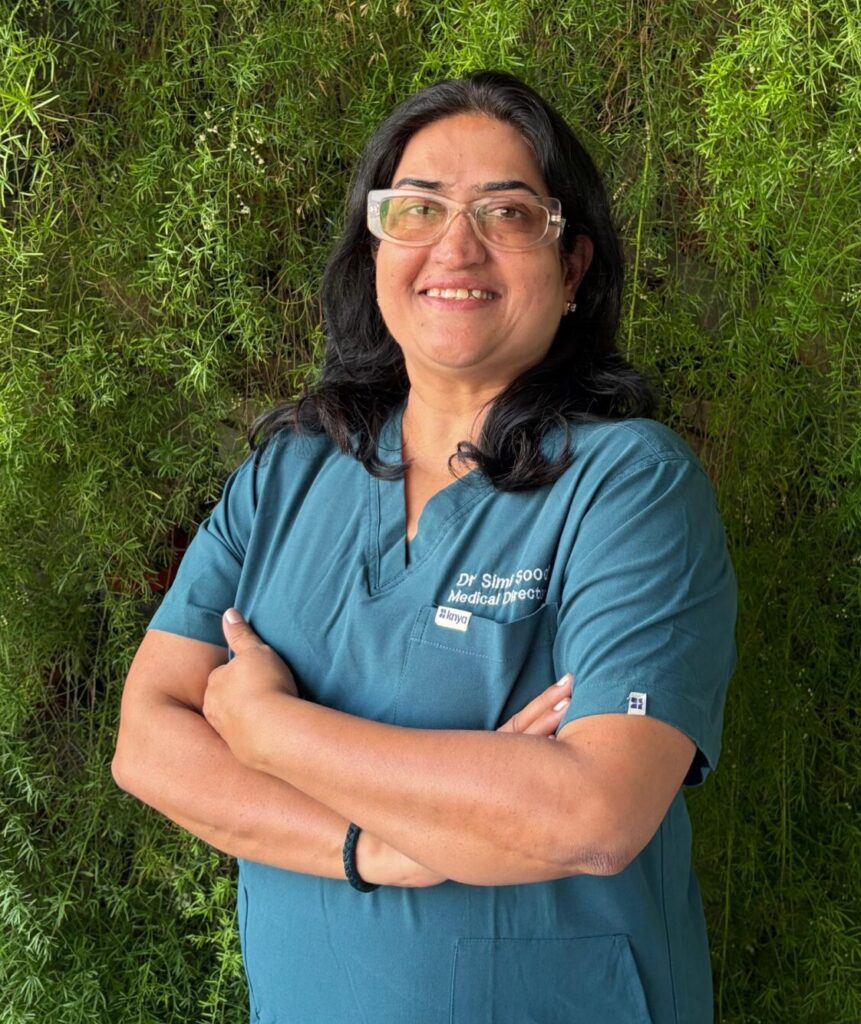
<p>Asar Care | IVF Podcast with Dr. Simi Sood (Neelkanth IVF, Udaipur)</p>
<p>Featuring a lab walkthrough with Dr. Ashish Sood | Host: Suhani Khanna | Full transcript</p>
<p>Educational content, reviewed by Dr. Simi Sood. Not medical advice. Please consult a qualified physician about your individual case. IVF outcomes vary by age and individual factors.</p>
<p><span class="dp-transcript-time">00:00</span> <strong>WHAT IVF IS, AND WHERE TO START</strong></p>
<p>When it comes to IVF, the most common issue that is aroused is that I don't know where to start or what I actually do. And for that, Asar sitting down today with Dr. Simi Sood, an IVF expert at Neelkanth IVF Center in Udaipur. And that's not it. We'll be joined by Dr. Ashish Sood, who will be walking us through some high tech machines and equipment that are available at IVF labs in NeelKanth Hospital.</p>
<p>People are coming from across countries, borders, from different languages to you. What is something that actually surprises them about India specifically when they come here? The personalised treatment, which is not possible in any of the countries, except India. How was partnering with platforms like Asar, or improved outcomes for your international patients. Once a patient chooses Asar, so they facilitate their treatment, their whole journey, coming from their country and reaching to us.</p>
<p>As you mentioned that affordability and the kind of cost structure that we have in India, a lot of people have this misconception that if you have something for a cheaper price, so does it come with a cheaper quality.</p>
<p><span class="dp-transcript-time">01:16</span> <strong>WELCOME</strong></p>
<p>Thank you so much for sitting down for this podcast, Dr. Simi Sood. It's absolute honour hosting your head with us again and starting off this podcast. My first question for you is that for anybody who's watching this podcast right now, in simple terms, not in the clinical ones, what is Ivy if and how does one approach it?</p>
<p>Ivy if in simple terms, I would say it means in- vitro fertilisation that we are making the embryos, we are creating a life outside the body of the female. So particularly in now generation or in now the times which we are facing now, as the global infertility is rising and it's on the rising trend. So it plays a very important role in the treatment and now over the years it's been simplified also. So making the embryos outside the body is IVF, in simple terms.</p>
<p><span class="dp-transcript-time">02:12</span> <strong>WHEN SHOULD A COUPLE SEEK HELP?</strong></p>
<p>Absolutely, and there's so many couples out there who wait and wait before actually seeking help, right? They try naturally but what is the saturation point that they reach and when they should actually go out to ask for help for this process? Yeah, so I would say that once a couple tries for pregnancy and they've been trying for six months continuously without any contraception and still they're finding difficulty to conceive.</p>
<p>So they should consult their fertility expert and IVF is not the only treatment. So we start with the basic, it's such step-wise process and we first do the investigations, then we start the simpler treatment with the medicines, then we go on to IUI (Intrauterine Insemination) and then the IVF.</p>
<p>So basically it's a step-wise process and we</p>
<p><span class="dp-transcript-time">03:02</span> <strong>WHAT SURPRISES PATIENTS: AGE AND FERTILITY</strong></p>
<p>should follow that diligently. And when a couple of walks through your doors and they tell about their situation to you, what is something that surprises than the most about their situation and what in terms of IVF as well they're most astonished about? I feel that nowadays many patients, most of the patients I would say, they are coming to us with the female has poor ovarian reserve, even younger patients. So as the age of menarche has</p>
<p><span class="dp-transcript-time">03:33</span> <strong>IS IVF THE ONLY OPTION?</strong></p>
<p>gone down, so has the age of menopause also gone down. And the ovarian reserve in females is going down considerably. So once the patient young girl coming to us for treatment and once we tell them that their ovarian reserve is very low and they'll have difficulty in conceiving and they need to go for IVF. So that comes as a surprise because they don't expect that they at the age of 25 or 26, the ovarian reserve is so low.</p>
<p>So simultaneously for male partner as well, the cases of oligospermia, very poor sperm count, even nill sperm count is going considerably, it's increasing. So that comes as a surprise to them. So it is difficult to, you know, explain it to them and to tell them that because they want to know why it happened, at such a young age.</p>
<p>So that is a challenge, but more awareness will bring, it will be better for the patients. I understand. So as we talk about IVF, is IVF the final solution for this or are there any simpler options available in the market that the couples are not aware of? Mostly nowadays, people who are coming for the treatment, they are more aware, they read it on the internet, but simpler options to start with, we can do some fertility enhancing surgeries for them, medical treatment, if possible, that is the first line of treatment. And then we step up to the IUI's, that is the intrauterine insemination.</p>
<p>And finally, if the patient doesn't conceive after these therapies, then IVF of course is the final treatment, yeah,</p>
<p><span class="dp-transcript-time">05:11</span> <strong>AFFORDABILITY AND PERSONALISED CARE IN INDIA</strong></p>
<p>and people are coming from across countries, borders, from different languages to you. And what is something like that actually surprises them about India specifically when they come here? First trend, foremost, I would say the cost of the treatment. Okay. That is considerably low.</p>
<p>Practically, you can say it is 1/10 of what they are paying out side in here. Yes. And this is something they cannot find back home. They cannot. They cannot. It's next to impossible to find back home. And second most important thing which I would like to mention, as we see, we also go to different countries for our conferences, we meet doctors there also, we have patients coming from across the globe. So the second thing is the personalized treatment, which is not possible in any of the countries except India, because here the doctor patient ratio is very high.</p>
<p>And the time which we are giving to our patient in the counseling in hand holding them in their journey, that is, it's par excellence. As you mentioned that affordability and the kind of cost structure that we have in India, a lot of people have this misconception that if you have something for a cheaper price, so does it comes with a cheaper quality.</p>
<p>And it means cutting corners, does that actually stand true? No, it doesn't. Because, you know, the KPIs that is the Key Performance Indicators</p>
<p><span class="dp-transcript-time">06:38</span> <strong>DOES CHEAPER MEAN LOWER QUALITY? THE ART ACT</strong></p>
<p>of any IVF center is their clinical pregnancy rate and the live birth rate. Or you can say the take home baby rate. So the clinical pregnancy rate and the take home baby rate in the best centers in India are they are at par of any of the international IVF centers throughout the world.</p>
<p>So that itself speaks volumes, that it's not that the cost is low and so we are cutting corners, the results are equally good and patients, you know, they can do their due diligence, because now everything is online after the coming of the ART(Assisted Reproductive Technology) regulations in India after 2022, we upload our results and everything. So it is in the public domain and everybody, they can do their due diligence and then they can, you know, opt for the treatment.</p>
<p><span class="dp-transcript-time">07:27</span> <strong>COMMON FEARS, AND HOW THEY ARE ADDRESSED</strong></p>
<p>Since they'll be doing their due diligence, they'll be finding a lot of things and they'll end up having a lot of fears. What are the common fears that you have encountered so far and how do you address them for people who are about to board their flights? First of all, they have the fear of are there any regulations in place?</p>
<p>So as I told you, just now that after 2022 ART(Assisted Reproductive Technology) act has come in the place in India, it's a law now. So after this act, all the regulations are in place, which all the IVF centers have to follow regarding the consents, the framework and what are the guidelines and what are the mandatory, they have to follow the procedures and everything.</p>
<p>So everything is in place and most of the centers, I would say 99% of the centers are following that. So I think they do not need to have fear for that thing I answered. And then second thing is the transparency which is very important. So I think once they have an online consultation with the consultant or the reproductive specialist before and they talk to the doctor.</p>
<p>So I think most of their fears can be taken care of.</p>
<p><span class="dp-transcript-time">08:41</span> <strong>COMFORT, LANGUAGE AND THE EMOTIONAL SIDE</strong></p>
<p>remarkable actually remarkable. But there are a lot of people who do not understand the language, the environment itself, the entire habitat is actually changed right. So how does the team at Neelkanth actually provide that home like feeling and that kind of support that it becomes manageable for them?</p>
<p>Yes, that's a very good question you asked. Like, first of all - Asar Care, we partnered with them. So they are taking care of all these things that once the patient who is traveling from a different country with a different language. So they don't have a problem. So they facilitate all these things.</p>
<p>They have a translator and proper things are managed accordingly. Absolutely. And they stay in India and everything. And then we partnered with Blue Lotus with the fertility wellness company. this is something which has never been done in India before because we are looking into not only giving the treatment best of the IVF treatment to the patients, but taking care of their emotional needs also because as you know, IVF is a very overwhelming treatment.</p>
<p>And you have to hand hold the patient throughout the journey. It's not only the clinical part, but taking care of their emotional aspect, their what fears they have and how you know we can ease the whole process because they'll have to stay here for maybe 10 to 15 days. So during that time, taking care of their small small needs also.</p>
<p>And then Blue Lotus has it will play a very big role because as we've planned around the treatment with them. So during the stay, they'll be staying in Udaipur, Rajasthan, India. Udaipur as you is the city of lakes and it has a very calming effect on the patient. And then away from whom you are away from all the triggers and all the like, you know, and your stressful activities back home.</p>
<p>So you are in a relaxed environment and to engage the patients, they have planned like, you know, different yoga sessions, meditations, small day excursions because the treatment part usually is managed within one or two hours and then patient is free. Then the whole day they are engaged.</p>
<p>So I think the comprehensive clinical as well as this, I think it can do really wonders.</p>
<p><span class="dp-transcript-time">11:02</span> <strong>CHALLENGES IN MEDICAL TRAVEL, AND HOW SUPPORT HELPS</strong></p>
<p>And speaking of people who are coming to India, medical tourism is something that they have actually faced challenges in. Right? What is something you have encountered personally that they have addressed to you, you know, that this is the issue that I'm facing in India. This is the issue that I've come across with maybe it's four habits, maybe it's the place they're living.</p>
<p>And how have you seen companies address this like locally? For that reason, only we've partnered with the Asar Care who will take care of once the patient boards the flight even before that. And even before they, you know, come back here to India, we'll make sure that the patient, they have a consultation with us online and we address any of their issues, which concerns them, then the blue lotus also, they will also take care of their whatever food requirements or preferences and whatever what all we advise during the treatment.</p>
<p>So everything can be taken care of their preferences can be known and what they would like to, you know, do during that stay here. So I think we can take care of that very well.</p>
<p><span class="dp-transcript-time">12:11</span> <strong>THE STEP-BY-STEP JOURNEY AND CREATING THE EMBRYO</strong></p>
<p>Absolutely. And talking about the consultation itself, work with the entire step-by-step process from the consultation to finally actually creating an embryo how it works. So once the patient contacts us, there'll be an online call with the patient with the senior fertility expert here in the Udaipur, Rajasthan, India.</p>
<p>And during that consultation, we need to know all the past history of the patient, whatever all investigations and treatment is already undergone. And we can suggest investigations or any required tests which can be done back home. We'll advise the patient so that then a second meeting will be arranged with all the required tests and everything. And then the treatment will be planned for the patient. It will be an individualized treatment because, as you know, fertility, it is very important that the treatment, it varies from patient to patient, according to the age, the rate of the patient, her hormonal parameters. So the treatment has to be designed for each and every patient differently.</p>
<p>And once we plan the treatment, then we can, you know, tell them then when they have to travel to India. So once they will travel to India for making of the embryos, that is the main IVF part where we, you know, collect the eggs and make the embryos, we freeze them. And then the second visit to India will be when we, when we have to transfer the embryos, we have to place the embryos inside the uterus.</p>
<p>So that will be around two to three months later. So practically within two visits, we can just, you know, wrap up the treatment. Remarkable, but for somebody who is traveling through flights, like crossing continents because of that, how many times do they have to come and visit one, two, three, how many times particularly it takes to actually succeed in the process?</p>
<p>I think not more than two times. Not more than two times? No, no, not more than two times. So one of the tests that you primarily look forward to while you're trying to understand a patient's health overall and what are you trying to understand out of it? Most important tests are the hormonal parameters of the male and the female.</p>
<p>They can very well be done out there only at their home country. And then a basic ultrasound, which we want to see most of the times they've already got it done. So they have a big file. So we can just go through the file before planning a consultation with the patient. So once we get all the reports and the previous treatment, which is the patient has taken, that gives us an idea as to how we can plan our treatment ahead.</p>
<p>And is there a way to reduce the number of</p>
<p><span class="dp-transcript-time">14:51</span> <strong>HOW MANY TRIPS DOES IT TAKE?</strong></p>
<p>trips that the couples have to take to India without cutting corners? I think as I told you two trips are mandatory and I don't think more than two trips are ever required. So that's good enough. That's good enough. They can come two times. That's bare minimum. You can do. Yes.</p>
<p><span class="dp-transcript-time">15:10</span> <strong>WHICH TESTS MATTER, AND DOING THEM AT HOME</strong></p>
<p>What genuinely separates a cycle that works from one that doesn't. And how much of that is actually in patients' own hands? Once the cycle fails, actually it depends on number of factors. First of all is the age of the patient, her fertility like what is the ovarian reserve of the patient. That plays a very important role because until now there is nothing to enhance the ovarian reserve. So whatever is the pool is there, we have to work with that only.</p>
<p>So that is the most important thing. And the condition of the uterus also. So whether the uterus is receptive or not. So that also plays a very big role. And patients usually whenever they are undergoing the treatment, they do follow it very diligently because there are a lot of injections, a lot of medicines also, tablets also, but they do follow it religiously. And that's not a concern.</p>
<p>IVF itself is not 100% successful. So how we can optimize the success rate that all depends on what center you are choosing. What is the expertise of the doctor? So many things they play a role Absolutely. That does make sense. But for somebody who has already tried IVF and failed, what would you say to them? Like what is something left for them to try and what is something that they should give it a try for? IVF I would say after evaluating all their previous records and seeing what like, you know, making a note of what would have gone wrong during that time.</p>
<p>We can reach to some conclusion. We can add few things which can optimize the treatment in such a patient. And as you know, every day technology is also changing. And many new things research is being done a lot in this field. And so many new treatment modalities are coming up. So it depends on what exactly was the problem with the patient. And according to that, we individualize the treatment.</p>
<p>Sure. And for somebody who wants to come to</p>
<p><span class="dp-transcript-time">17:13</span> <strong>WHAT SEPARATES A CYCLE THAT WORKS</strong></p>
<p>India for this treatment, what is the cost structure like, and starting off from the very</p>
<p><span class="dp-transcript-time">17:20</span> <strong>AN HONEST WORD ON IVF SUCCESS</strong></p>
<p>beginning to the variant? Regarding the cost, we have to be very transparent. So once we do a consultation with the patient, we tell them up front only, what will be the exact cost? The whole, there is, there are no hidden costs in that. And that's it. As I told you, the treatment in India is almost one tenth.</p>
<p>Oh, wow. It would cause them when if they are doing it in their home country. And what are the unexpected costs that catches them off-guard when they come to India for treatments? I don't think there are any unexpected costs related to the treatment because we know what we are doing. And we know what procedures have to be done. So 99 percent of the time, we know it from beforehand only.</p>
<p>And we have to be transparent in, you know, counseling the patient as so that they are prepared for the cost. Absolutely. From your experience at Neelkanth, what difference does it make when an international</p>
<p><span class="dp-transcript-time">18:19</span> <strong>IF YOU HAVE HAD A FAILED CYCLE</strong></p>
<p>patient arrives already in form knowing the process, the right questions to ask and having chosen their, their clinic with intention. Yeah. So if they are coming to Udaipur, Rajasthan, India. Udaipur itself is a very calm place. It is surrounded by mountains and lakes. And there is, it's not a chaotic place like any of the metros in the country, Delhi, Mumbai.</p>
<p>So that makes a lot of difference. You can go anywhere from one place to another within five to 10 minutes. You can reach anywhere. And to ease the treatment and to make their experience, you know, really, yeah, to calm them down because the treatment is itself, it's very difficult. So to, for that, we have low lotus fertility wellness.</p>
<p>It's a new concept. But it really, because once the patient is in under stress during treatment and that happens, it's natural. So to bring down the cortisol level, which cortisol is a hormone we all know, which really, it brings down the success rate of IVF also. Okay. It can lead to premature abortions also or missed abortions also. So to bring down that cortisol level, doing yoga and meditation during that time and keeping your, this thing, you know, calming the mind, that is the most important thing.</p>
<p>And I think during the treatment, we are just, you know, and describing the treatment, we are not dealing</p>
<p><span class="dp-transcript-time">19:49</span> <strong>THE COST, AND TRANSPARENCY</strong></p>
<p>with the emotional aspect of the patient. Absolutely. So we have to treat her like, you know, as a person, not that she's just a patient. So I think it really makes a lot of difference. So during that time, if the patient is happy, I would say to it adds value to that. Absolutely.</p>
<p>Absolutely. She's creating life. Come on, she has to be happy. She has to be happy. Then when we speak of Asar Care itself, Asar Care works with multiple IVF centers across India. So patients can find the right one. What does the patient truly gain when someone helps them navigate choice from the very beginning? And how is partnering with platforms like us, or improved outcomes for your international patients? So once the patient, they choose Asar Care.</p>
<p>So they facilitate their treatment, their whole journey coming from their country and reaching to us, reaching us at Udaipur, Rajasthan, India. So it really helps them. And then for us also, it's very easy to, you know, reach to those patients, to international patients, because without them, for us also, it is difficult to reach such, to such patients, you know, to assure them that who will take care of their whole travel and all these are things and everything has to be taken care of, because once you are traveling to a foreign country, many things have to be in place.</p>
<p>So I think Asar Care takes care of that. And then from then onwards, we take care of the patient. Yes, remarkable. And looking at the camera, for someone who is watching this podcast right now, for someone who had a very difficult month and wondering if this dream will ever happen for them again, what do you want to say to them directly?</p>
<p>I would just say that don't lose hope, because it's not that if you fail your IV of cycles, because we have done in IV of patients who have undergone 10 cycles and still they, you know, had the strength and the grit to, you know, undertake it again. And it does happen. If we do it diligently and if the doctor, you have the trust in your doctor, so it really makes a lot of difference.</p>
<p>And it does give results. It's a beautiful technology and very simplified now over the years. Ramarkable, I hope that helps anybody who's listening to this.</p>
<p><span class="dp-transcript-time">22:14</span> <strong>WHY A CALM SETTING AND LOWER STRESS MATTER</strong></p>
<p>And once the patient boards the flight back home, now everything is packed, everything is done, sorted. Now they're back home. What happens next? How does Neelkanth and Asar Care continue to support them, monitoring their progress, managing their results and staying by their side throughout, what can be the most anxious days of their lives? That thing in India, it's a very advantage that all our senior doctors, they are all the doctors at Neekant, we are at call 24 hours a day, you know, any time of the day, we can connect with the patient. So, Asar Care can help the patients connect to us and we can, you know, talk to the patient and whatever.</p>
<p>If something is emergency is required, we can guide them as to who they have to go to in their respective country. Even we can talk to the doctor there and on their part , and we can suggest from our side and what can be done. So, we are available 24 hours 365 days of the year. That's very reassuring to be honest.</p>
<p><span class="dp-transcript-time">23:16</span> <strong>HOW ASAR CARE HELPS INTERNATIONAL PATIENTS</strong></p>
<p>If a patient returns home and their test results, raise concerns or something simply does not feel right. What is the protocol and how do you make sure they never left alone trying to navigate that moment without guidance. So, their patient will contact Asar Care and they will talk to us senior doctor here at Neelkanth and immediately we can connect with the patient and advise them whatever can be done there.</p>
<p>And most of the time once the patient is traveling back even before going back, we advise as to what all we can predict what can happen, you know. So, we can advise them beforehand also that what they can do in different circumstances.</p>
<p><span class="dp-transcript-time">23:54</span> <strong>INSIDE THE IVF LAB WITH DR. ASHISH SOOD</strong></p>
<p>Next, we have Dr. Ashish Sood who takes this on an exclusive tour of Neelkanth Hospital's world-class IVF Lab. So, let's get into it. Mr. Sood, what are these machinery and how they actually make that IVF dream come true? Yeah. IVF complex is divided into three parts. The first part is ovum pick-up (OPU) room and Embryo transfer room.</p>
<p>Where presently we are standing is ovum pick-up (OPU) room and Embryo transfer room . This is where the pick-up of the oocyte-cumulus complex (OCC) is done. And then that oocyte-cumulus complex (OCC) is passed on to the IVF Lab where an embryologist combines sperm and eggs to make embryos and once the embryos are made, they are passed back into the IVF Lab where the embryo transfer happens.</p>
<p>The two major procedures which are done here are ovum pick-up (OPU) and and embryo transfer. Okay. So, can you please show us around these machines how they work and what they actually do? Yeah. The lab which where we are standing, the whole complex is a modular lab. It is like a stainless, if you can see, it is like a stainless thin box. So, no outside air can enter inside because we have to maintain an absolute sterile environment for the ovum pick-up (OPU) and also for the Embryology Because what we are using a single cell structure, a sperm is a single cell and oocyte is also a single cell.</p>
<p>So, basically we are fertilizing two single cells and we are doing the whole procedures outside human body and there are a lot of chemicals and pollutants around us in the present world. Absolutely. So, we have to maintain an excellent sterile environment so that this embryos can know and make happy babies which is happiness to the couple.</p>
<p>The ovum pick-up (OPU) pickup is done on this table. This is done on the anesthesia. Light anesthesia patient is anesthetized and we use this ultrasound machine and with the help of transvaginal probe of the ultrasound machine we focus the ovaries and with the oocyte aspiration pump.</p>
<p>This is the pump. We use this pump along with the ultrasound machine and we aspirate the follicular fluid. That follicular fluid is collected in this test tube warmers which are maintained at 37 degree Celsius because human body temperature is 37 degree Celsius. And this follicular fluid has oocyte-cumulus complex (OCC) which has Oocyte and then this tube is passed on through this pass box into the I-V-F lab. Okay. The pickup OT(Operation Theater) is class 1 LAC.</p>
<p><span class="dp-transcript-time">26:20</span> <strong>SUPPORT AFTER YOU FLY HOME</strong></p>
<p>The air, the quality of air inside air is class 1 LAC. It is as per international standards the quality of air which we have to maintain for an ovum pick-up (OPU) room. And once the embryos are formed which takes around 3 to 5 days and the embryos will be loaded in embryo transfer catheter patient will be brought back and through the help of ultrasound machine we focus the uterus and transvaginally we transfer the embryos inside the Uterus. Once the embryos are transferred the I-V-F procedure is completed. Got it!</p>
<p>And I will tell you more about when we move into the embryology laboratory how the whole procedure is done. So as you just briefed does in the other room what is the next procedure in the IVF process? As I said that the oocyte-cumulus complex (OCC) are collected in this test tubes and this fluid contains follicular fluid contains oocyte-cumulus complex (OCC) and that when it will be passed on to the embryologist and this is a laminar flow.</p>
<p>As I told we have to maintain the quality of air inside the lab our OT(Operation Theater) was Class 1 LAC this I-V-F lab is Class 10,000, now the air inside the lab though the whole room is sterile, it is again filtered inside this</p>
<p><span class="dp-transcript-time">27:30</span> <strong>THE EMBRYOLOGY LAB AND AIR QUALITY</strong></p>
<p>laminar flow they are set of filters here and then the oocyte-cumulus complex (OCC) will be screened under the stereosome microscope and whatever oocyte-cumulus complex (OCC) is the number of Oocytes we make we put it in a culture media and then they are transferred into the incubator.</p>
<p>So what are these machines and how do they actually contribute in the I-V-F process?</p>
<p><span class="dp-transcript-time">27:50</span> <strong>INCUBATORS: GROWING THE EMBRYO</strong></p>
<p>Yeah these are called benchtop incubators basically we are culturing the Ambryos outside the human body so we have to for the culture for the growth of the embryos we have to maintain an environment which is close to the human body close to the uterus because embryos normally grows inside the uterus and not in the outside environment.</p>
<p>So these incubators are CO2 incubators and the environment inside the incubator is almost same as that of the uterus. So when we culture the embryos the Egg & Sperm , the fertilized Egg & Sperm</p>
<p><span class="dp-transcript-time">28:24</span> <strong>ONE PATIENT PER CHAMBER, AND ICSI</strong></p>
<p>, so they are kept inside these incubators and the environment inside this incubator is close to the uterus so that they get the right environment to grow and we check the embryos on day 3 that is called the cleavage stage embryos and then we check again on day 5 which are called Blastocyst Stage embryos and depending on the number of embryos we make transfer on day 3 which is a cleavage stage embryos all we make transfer day 5 which is a Blastocyst Stage embryos and we have these multiple machines because each machine has got two compartments. So one compartment is dedicated for one patient as per international standards because we don't want to mix first mix the embryos secondly we don't want to disturb the process, because we have to open for the one patient then the if it is mixed then the embryos inside of the other compartment will also be disturbed.</p>
<p>So we dedicate one chamber to one patient that is why we have multiple machines we have to keep the embryos. So basically these incubators are for the cultureing of the Ambrose till the date they are ready for the transfer. What is the use of this machine before the process? This machine is called ICSI(Intracytoplasmic Sperm Injection) machine that is machine for intra cytoplasmic sperm injection. This is mainly for the treatment of male infertility. The husbands who are having a low sperm count or oligosporemia or who are having low motility they have adequate number of sperm but the sperm are not motile that is called testicular azoospermia . So those weak sperm are not able to fertilize the Oocyte on their own.</p>
<p>So we use this machine here for the fertilization of the eggs. Here we take the sperm sample and eggs and with this help of this micro needles here we will select the best possible sperm, the healthy sperm and with the second needle they will hold the oocyte and the one sperm that they have catched they will inject inside the uterus for the fertilization.</p>
<p>Normally this is a natural process but with the patients with weak sperm so low sperm count it doesn't happen naturally so that has to be done with help of this machine. This is for ICSI(Intracytoplasmic Sperm Injection) and this is for</p>
<p><span class="dp-transcript-time">30:34</span> <strong>CLOSING</strong></p>
<p>male infertility. Thank you so much Dr. Sood for giving us an inside look into these advanced IVF labs and high-tech medical facilities and if you are planning to begin your IVF journey connect with Asar Care today and experience seamless medical tourism with care you can trust.</p>
</div>