Overview
Alzheimer’s evaluation has traditionally
combined history, cognitive testing, structural imaging and, in selected cases,
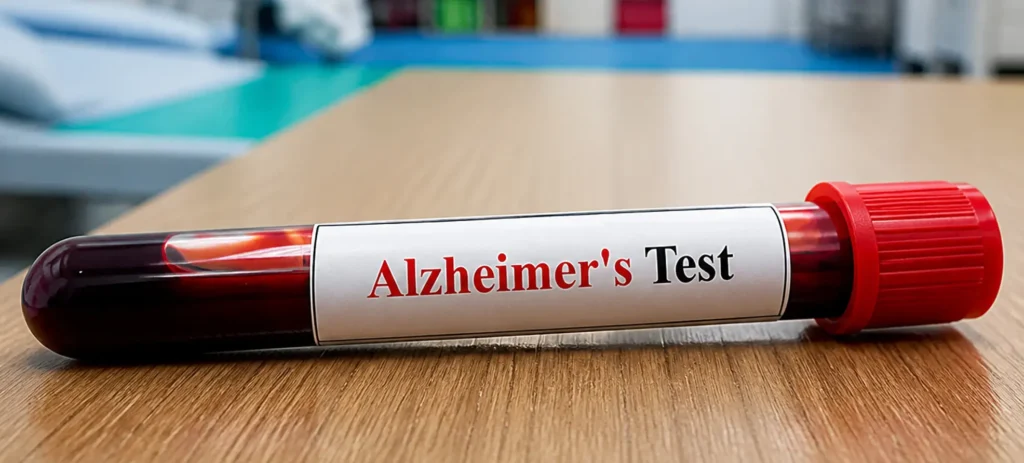
cerebrospinal-fluid or amyloid PET biomarkers. Blood biomarkers-particularly
phosphorylated tau measures and amyloid-related ratios-are now moving into
specialist pathways. In early 2026, selected Indian centres announced a
Gurugram dementia diagnostic series using a p-tau217/amyloid-beta 1-42 ratio
alongside cognitive, genetic and AI-supported imaging assessment when
clinically indicated.
What a biomarker can do
A validated blood biomarker may help
estimate whether Alzheimer-type amyloid and tau pathology is likely, support
referral decisions or identify who needs confirmatory testing. It is not a
general memory test and should not be ordered in isolation for every worried
but healthy adult. Performance depends on the assay, population, cut-off and
clinical setting.
What it cannot do
Memory symptoms can arise from depression,
sleep disorders, thyroid disease, vitamin deficiency, medicines, stroke and
other neurodegenerative conditions. A positive biomarker does not measure
day-to-day independence or by itself establish the full cause and stage of
symptoms. A negative result may redirect evaluation but does not exclude every
neurological disease.
A sensible India pathway
International patients should begin with a
neurologist, geriatrician or memory-clinic assessment. Bring a family
informant, medication list, timeline of changes, previous cognitive scores and
original MRI images. The clinician can decide whether blood biomarkers, MRI,
FDG PET, amyloid testing, sleep assessment or laboratory work is appropriate.
Genetic testing needs counselling
Risk panels and APOE-related information
can have psychological and family implications and may affect the
interpretation or safety planning of some disease-modifying treatments. Ask
whether the test is diagnostic, risk-related or treatment-related, who provides
counselling and how data privacy is managed. Do not confuse a genetic
susceptibility result with certainty that dementia will develop.
Begin with a full memory assessment
A specialist should establish what has
changed, when it began and how daily function is affected. A family member or
close informant often provides essential history. Examination, cognitive
testing and review of hearing, vision, mood, sleep, alcohol and medicines
remain important even when a blood biomarker is available. Basic laboratory
evaluation and structural brain imaging may identify treatable or alternative
causes. A biomarker should answer a defined question within this pathway; it
should not be ordered simply because forgetfulness is worrying.
Assay names and cut-offs matter
Different tests measure different forms or
ratios of amyloid and phosphorylated tau, and performance depends on the assay,
population and threshold. Results from one platform cannot automatically be
interpreted using another platform’s cut-off. Ask for the exact assay,
laboratory quality information, units, reference range and whether the test is
intended to rule out, rule in or triage for confirmation. Kidney disease, age
and other biological factors may affect interpretation. Borderline results
often require specialist review rather than a binary label.
A positive result is not the whole diagnosis
Alzheimer-type pathology can coexist with
vascular disease, Lewy body disease or other causes of cognitive impairment.
Some people can have biomarker changes before major symptoms, while others have
symptoms driven mainly by another condition. The clinician must integrate the
blood result with history, function, cognition and imaging. Confirmatory
cerebrospinal-fluid or PET testing may still be recommended, particularly when
considering disease-modifying treatment. The value of the test lies in improving
diagnostic confidence and directing the next step, not replacing clinical
reasoning.
Treatment decisions need additional safety assessment
Eligibility for a disease-modifying therapy
depends on diagnosis, disease stage, comorbidities, brain MRI findings,
bleeding risk, anticoagulant use and the medicine’s regulatory and local
availability. Biomarker positivity alone is insufficient. Patients should ask
about benefits, monitoring burden, infusion or administration schedule,
amyloid-related imaging abnormalities and emergency symptoms. Genetic
information such as APOE status may be relevant to risk discussions but
requires careful consent. International travel can complicate repeated MRI and
treatment monitoring, so continuity must be planned before starting.
Plan communication and support
Bring prior cognitive scores, scans,
laboratory results and a current medication list, along with legal or family
contacts where appropriate. Request a written diagnostic formulation that
separates confirmed findings from uncertainty and lists recommended next steps.
Results can cause significant anxiety and should be disclosed in a supportive
consultation, not released without explanation. Agree how the Indian specialist
will communicate with the home clinician and who will manage driving, work,
medication and safety advice. Urgent new confusion, weakness, severe headache
or functional decline requires local medical assessment, not routine remote
follow-up.
Before confirming the appointment
For blood biomarkers for Alzheimer’s
disease arrive in India, ask the provider to convert the proposed pathway into
a written, dated plan. It should identify the lead clinician, purpose of each
test or procedure, what can change after examination, likely duration in India,
recovery or reporting milestones, and the follow-up arrangement after
departure. Request a complete quotation with inclusions, exclusions and
cancellation terms. Confirm how urgent concerns are escalated and which records
will be released. This final check makes it easier to compare providers on
clinical pathway and continuity-not simply technology, package price or an
advertised turnaround time.
The balanced takeaway
India’s emerging blood-biomarker services
can make specialist dementia assessment more accessible and potentially reduce
reliance on invasive testing for selected patients. Their value comes from
integration with clinical evaluation and imaging-not from using one blood
number as a stand-alone diagnosis.
The top 5 questions to answer before booking
1. Start with a full cognitive and medical assessment.
2. Ask which exact biomarker assay is being used and what question it answers.
3. Do not interpret a positive or negative result in isolation.
4. Clarify whether MRI, PET, CSF or other tests may still be needed.
5. Plan treatment eligibility and follow-up separately from biomarker testing.
Frequently asked questions
1. Can a blood test diagnose all dementia?
No. It targets selected biological features and must be interpreted within a clinical assessment.
2. Should healthy people routinely use it as a screening test?
Routine population screening is different from specialist diagnostic use and should be discussed with a qualified clinician.
3. Will MRI or PET still be needed?
Possibly. The appropriate tests depend on symptoms, examination and the clinical question.
4. Does a positive biomarker prove that symptoms are caused only by Alzheimer disease?
No. Multiple causes of cognitive impairment can coexist.
5. Can biomarker positivity alone determine treatment?
No. Treatment eligibility depends on diagnosis, stage, imaging, risk factors and the specific therapy.
Final planning note for international patients
Before travelling, ask for a written clinical plan that identifies the lead clinician, the purpose of each test or procedure, what may change after examination, the expected time in India, recovery or reporting milestones, and the follow-up arrangement after departure. Request a complete quotation with inclusions, exclusions and cancellation terms. Carry your relevant medical records and ensure that the treating team knows which clinician will remain responsible for follow-up after you return home.
Medical disclaimer: This article provides general educational information and does not diagnose, recommend a specific provider or replace individualized medical, dental, orthodontic, diagnostic or immigration advice. Suitability, risks, outcomes, timelines, treatment availability and costs vary. Patients should obtain an individualized assessment from appropriately qualified professionals and verify current requirements before travel.
Five red flags worth taking seriously
- Large test packages without a defined clinical question
- AI is presented as the final diagnostic authority
- Prior imaging or laboratory results are ignored without explanation
- No named clinician responsible for interpretation
- No plan for urgent findings, secure records transfer or follow-up
Five records to keep after treatment or testing
- Signed final reports
- Original or standard-format imaging/data files where available
- Laboratory methods and reference ranges
- Specimen or pathology information where relevant
- Secure communication route for the home clinician
How to compare options responsibly
When comparing diagnostic services, prioritize the clinical question, test selection, technical quality and validation, specialist interpretation, and secure handover of results. A larger package or newer scanner does not automatically provide more useful information. The best pathway minimizes unnecessary duplication while producing results that can be interpreted and acted upon by the treating team.
Planning treatment in India?
Use this guide as a starting point for your discussion with the treating team. Before travelling, obtain an individualized assessment, a written treatment pathway, clear inclusions and exclusions, and a practical follow-up plan for after you return home.