Overview
A cancer diagnosis is news almost no one expects. In the hours after it, families often sit with a search engine at 2 a.m., trying to understand a word that has just changed everything. This guide is written for that moment. It explains, in plain terms, how patients who travel from one country to another for cancer care think through the decision -what helps, what to avoid, and where time matters most. It draws on a conversation with Dr. Anil Anand, a radiation oncologist in Delhi NCR who has treated many international patients.
Why timing shapes everything in cancer
Cancer is, by its nature, time-dependent. Disease that begins at an early stage can progress to later stages if it is left untreated, and earlier-stage disease is generally more treatable than advanced disease. That single fact drives most of the advice that follows. As Dr. Anand puts it, in cancer care the patient, the family and the doctor are all “running against time.”
This is not just clinical intuition. Survival is strongly tied to the stage at which cancer is found: for lung cancer, five-year stage-specific survival ranges from roughly 53–69% at stage I down to under 10% once the disease has spread to distant organs.¹ A practical rule Dr. Anand offers: any symptom that does not resolve within two to four weeks deserves a specialist’s opinion. Cancer’s early symptoms overlap with ordinary illnesses -a persistent hoarse voice, for example -so it is common for people to move from one clinician to another for months before anyone suggests a biopsy. That delay, not the travel itself, is often what turns an early-stage problem into an advanced one.
The most common pattern Dr. Anand sees in patients who arrive from abroad
Across patients arriving from South and Southeast Asia, the Middle East, Central Asia and parts of Africa, he describes a recurring sequence: a delay between first symptom and diagnosis, sometimes another delay for a repeat biopsy that was inadequate the first time, and arrival in India at a more advanced stage than necessary. This pattern is borne out in the wider evidence -a meta-analysis found that migrant patients are significantly less likely than non-migrants to be diagnosed at an early stage, with diagnostic delays leading to later-stage disease and poorer survival.² None of this is a criticism of patients -it reflects gaps in local access, long appointment queues, and the simple fact that cancer is hard to suspect early.
Honest framing
There is no guaranteed outcome in cancer care, and arriving earlier does not promise a cure. What earlier diagnosis and well-planned first treatment do, according to Dr. Anand, is widen the options available and reduce avoidable harm. Individual results vary.
Why the first treatment decision carries so much weight
Cancer treatment rests on three pillars -surgery, radiation and chemotherapy -and the right combination depends entirely on the cancer type and its stage. Some cancers need surgery plus radiation; some are treated without surgery at all; some respond to chemotherapy alone. There is no single treatment that fits everyone.
This is why the first treatment matters more than people expect. Dr. Anand describes cases where an initial surgery was well-intentioned but incomplete -a tumour removed without the staging and clearance that cancer surgery requires -leaving the patient worse positioned for the treatment that should have come first. A second attempt is harder, riskier and more expensive. His summary is blunt: in cancer, the first treatment should be the best treatment. That is also why he stresses a properly coordinated, multidisciplinary team -surgeon, radiation oncologist and medical oncologist working together rather than in sequence by chance. The evidence supports him: an umbrella review concluded that the multidisciplinary approach is the best way to deliver the complex care cancer requires, producing more accurate staging and more appropriate treatment, though it is honest to note that a team review improves the quality and consistency of decisions rather than guaranteeing a better outcome in every case.
What patients tend to find surprising about care in India
Most arrive expecting affordability, and Dr. Anand confirms cost is a major reason patients choose India -many find treatment a fraction of what it would cost in destinations such as the United States, Europe or Singapore. (Exact savings vary widely by treatment and by country of origin; Asar Care provides a personalised estimate rather than a fixed published price.) What surprises them, he says, is that affordability sits alongside current technology and well-trained clinical teams, rather than instead of them.
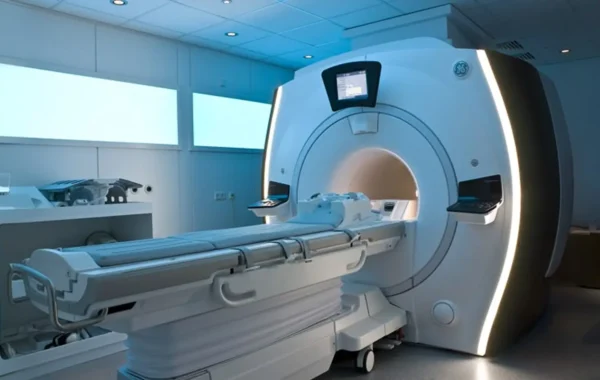
He points to his own centre’s MR-Linac -an MRI-guided linear accelerator -as an example. Unlike a conventional machine that uses X-ray-based (cone-beam CT) imaging to line up treatment, the MR-Linac combines an MRI scanner with the radiation delivery system. This matters because MRI gives far better soft-tissue contrast than CT-based guidance, and the system allows the team to adapt the plan to the patient’s anatomy on the day of treatment -published reviews describe this as enabling clinicians to maximise dose to the tumour while minimising dose to the surrounding organs at risk.⁴ The clinical goal is precision: deliver radiation to the tumour while sparing the healthy tissue around it, which can mean fewer side effects. As of May 2026, Dr. Anand’s team at Fortis Gurugram has treated more than 320 patients on the MR-Linac, with all planning and treatment data recorded in their Mosaiq oncology information system. (The patient count is documented in their records; the broader benefit described here reflects the published evidence on MRI-guided radiation and the team’s clinical experience, and outcomes vary by patient.)
How we know
The patient numbers cited here are not estimates. Treatment centres record planning and delivery data in oncology information systems -at Fortis Gurugram, the MR-Linac figure is drawn from their Mosaiq system, which stores the treatment record for every patient. Where Asar Care cites a number, it is anchored to a date and a source.
How to choose where to go the three things that should travel together
Dr. Anand’s framework for judging quality is simple and worth repeating to any family making this decision. Three things should exist together:
1. An accomplished doctor whose training and track record you can actually check -his words: you can look up where a doctor trained and what technology they work with.
2. Access to current technology -advanced radiation, robotic surgery where relevant, strong medical oncology.
3. A well-equipped hospital and a team that collaborates across specialties.
A strong hospital brand alone is not the whole answer; the specific doctor and team matter. And he is candid about treatments to be wary of: while supportive practices like yoga can help wellbeing, cancer itself needs proven medical treatment, and substituting unproven “indigenous” remedies for it tends to cost patients the one thing they cannot get back -time.
What the journey actually looks like, step by step
Done well, the process starts before the patient leaves home:
1. Confirm the diagnosis. Ask your local doctor directly whether this is cancer, and whether the facilities you need exist where you live.
2. Gather everything. Collect biopsy material and prior scans -carrying the original biopsy means it usually does not have to be repeated, saving weeks and money.
3. Connect with the treating doctor in advance. Modern video consultation lets an oncologist review scans remotely and form a plan before arrival, so time is not lost on repeat investigations.
4. Arrive prepared. With a framework already in place, staging and work-up can be completed in roughly a week rather than four, and treatment can begin sooner.
5. Plan the stay realistically. Recovery time depends on the treatment -a week for something limited, two to four weeks (sometimes longer) where surgery is followed by radiation. Rushing home the day after treatment ends can undermine recovery.
6. Build in follow-up. This is the step Dr. Anand calls the weak link in medical travel. Cancer needs follow-up every three months for about two years, then every six months, plus management of any late side effects. A good facilitator keeps the patient connected to the treating team -by video where needed -long after they fly home.
The non-medical struggles and why support changes outcomes
Arriving in an unfamiliar country brings practical problems that have real clinical consequences: language barriers, unfamiliar food, accommodation, local transport, getting to the right hospital and the right doctor, and managing a battery of tests. When a coordinated team handles these, Dr. Anand says, the patient’s burden drops substantially and, because they reach the right care faster and in better general condition, recovery improves. Support is not a luxury wrapped around treatment; it is part of what makes treatment work.
A real patient story told honestly
Dr. Anand shared the case of a patient from Ethiopia with a very advanced tumour who arrived in a difficult condition, with surgery not initially possible. The team used MRI-guided radiation together with chemotherapy, adapting the plan as treatment progressed. The local disease responded well -a complete local response -and the patient regained independence. In cancer, though, the picture is rarely simple: follow-up scans later found two small spots in the lung, which are being managed. We share this not as a cure story but as a realistic one: advanced disease can sometimes be brought under meaningful control, results vary from person to person, and ongoing follow-up is exactly why it matters.
If you are reading this while deciding
Dr. Anand’s advice to someone scared and delaying is sequential and calm. First, explore: ask your doctor point blank whether it is cancer. Then find out whether the facilities you need exist where you live. If they do not, send a short medical summary to a responsible facilitator or hospital so a specialist can tell you what treatment would involve -before you commit to travel. The aim is to reach the right care early, in good condition, and with someone coordinating the journey from before departure through the years of follow-up that come after.
How Asar Care helps
Asar Care coordinates this end-to-end journey for international oncology patients -connecting you with doctor-reviewed information and the right specialists before you travel, and staying with you through follow-up. If you have questions about a specific situation, you can share a brief summary with our patient team and we will help you understand the options. We do not provide a diagnosis or guarantee outcomes; that always rests with the treating doctor.
Educational content reviewed by Dr. Anil Anand. Not medical advice. Please consult a qualified physician about your individual case.
References
- Stage-specific survival, lung cancer. Stage Migration and Lung Cancer Incidence After Initiation of Low-Dose CT Screening, Journal of Thoracic Oncology. jto.org
- Migrant patients and later-stage diagnosis. Comparing cancer stage at diagnosis between migrants and non-migrants: a meta-analysis, British Journal of Cancer (2024). nature.com/articles/s41416-024-02896-0
- Multidisciplinary team care. The impact of tumor board on cancer care: an umbrella review, BMC Health Services Research (2020). doi.org/10.1186/s12913-020-4930-3
- MRI-guided radiation therapy. MRI-guided Radiation Therapy: An Emerging Paradigm in Adaptive Radiation Oncology, Radiology (RSNA); and MR-Linac vs cone-beam CT for adaptive therapy, PMC. pubs.rsna.org/doi/10.1148/radiol.2020202747
Note: these are real, peer-reviewed sources located for Asar Care; your co-founder should confirm each link resolves and is the best available version before publication. The US/Singapore cost multipliers remain Dr. Anand’s attributed view and need a market-research source.