Can Artificial Intelligence Help Doctors Diagnose Diseases More Accurately?

Discover how AI is supporting doctors in disease detection, medical imaging and diagnosis while understanding its benefits, limitations and role in patient care.

0:00
0:00

Overview

Artificial intelligence (AI) has become one of the most talked-about developments in modern medicine. From detecting cancer on medical scans to helping doctors review patient records, AI is increasingly being integrated into healthcare systems around the world. While headlines sometimes suggest that AI will replace doctors, the reality is more balanced. Today, AI is designed to support healthcare professionals — not replace them.

For patients, understanding how AI is used can help reduce uncertainty and build confidence when discussing diagnosis and treatment options. This article explains how AI works in healthcare, where it is currently being used, its benefits and limitations, and what patients should know before relying on AI-assisted medical decisions.

What Is Artificial Intelligence in Healthcare?

Artificial intelligence refers to computer systems that can analyse large amounts of information, identify patterns and make predictions. In healthcare, AI is trained using thousands — or sometimes millions — of medical images, laboratory results and clinical records so it can recognise features associated with specific diseases.

Unlike traditional computer programs that follow fixed rules, AI systems improve by learning from data. However, they still require careful validation and continuous monitoring before being used in clinical practice.

AI is not a doctor. It cannot examine a patient, understand every personal circumstance or replace the experience and judgement of healthcare professionals. Instead, it acts as a clinical support tool, helping doctors make faster and more informed decisions.

How Is AI Used in Healthcare Today?

AI is already being used in many areas of medicine.

Medical Imaging

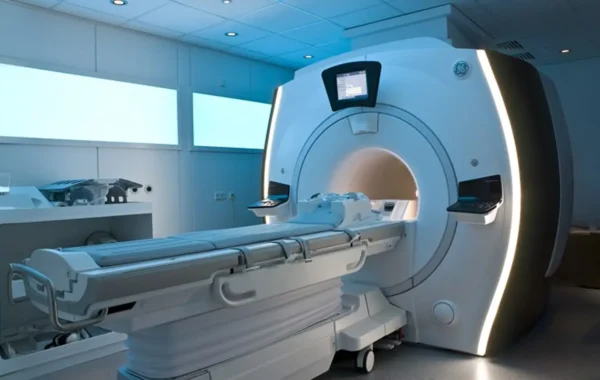
One of the most successful applications of AI is in radiology. AI can analyse X-rays, CT scans and MRI scans to highlight areas that may require closer review. For example, it can help identify lung nodules, fractures, strokes or suspicious breast lesions.

Rather than replacing radiologists, AI helps prioritise urgent cases and reduces the chance of subtle abnormalities being overlooked.

Cancer Detection

AI is increasingly used in cancer screening programmes, particularly in mammography, lung imaging and pathology. It can identify patterns that may indicate early disease, allowing specialists to investigate further.

Early detection often leads to more treatment options and improved outcomes, making this one of the most promising areas of AI research.

Pathology

Digital pathology allows tissue samples to be scanned into high-resolution images. AI can then assist pathologists by highlighting abnormal cells, estimating tumour characteristics and improving workflow efficiency.

Eye Disease

AI systems can detect diabetic retinopathy and other retinal diseases from photographs of the back of the eye. In some settings, this has improved access to screening, especially where ophthalmologists are limited.

Cardiology

AI can analyse ECGs, cardiac imaging and wearable device data to help identify abnormal heart rhythms or predict patients at higher risk of cardiovascular events.

Benefits of AI for Patients

When used appropriately, AI offers several potential benefits:

  • Earlier detection of some diseases
  • Faster interpretation of medical images
  • Improved consistency in reporting
  • Support for doctors managing complex cases
  • Better prioritisation of urgent patients
  • Reduced administrative burden, allowing clinicians to spend more time with patients

These advantages are particularly valuable in healthcare systems facing increasing patient numbers and limited specialist resources.

What Are the Limitations?

Despite its potential, AI has important limitations.

AI is only as good as the data used to train it. If training data do not represent different ages, ethnicities or disease patterns, the system may perform less accurately for some patients.

AI also lacks the human understanding needed to interpret symptoms, lifestyle factors and patient preferences. A scan may appear normal even when a patient has significant symptoms, or an abnormal finding may turn out to be harmless after clinical assessment.

For these reasons, AI should always be used alongside qualified healthcare professionals.

Questions to Ask Your Doctor

If AI has been used in your care, consider asking:

  • Was my result reviewed by a specialist?
  • How accurate is this AI system?
  • Does it influence my diagnosis or simply support the doctor’s decision?
  • Are further tests needed?
  • How is my medical information protected?

How ASAR Can Help

Understanding new medical technologies can be confusing, particularly when planning treatment or seeking care abroad. ASAR helps patients organise medical records, understand diagnostic reports and connect with experienced specialists for independent second opinions. Our goal is to help patients make informed decisions using evidence-based information and expert clinical guidance.

Medical Disclaimer

This article is intended for educational purposes only and should not replace advice from a qualified healthcare professional. Diagnosis and treatment decisions should always be based on an individual medical assessment and discussion with your treating doctor.

References

 World Health Organization (WHO), NHS England, U.S. Food and Drug Administration (FDA), Nature Medicine, The Lancet Digital Health.

Latest Articles

asarcare

ASAR Care Team – dedicated to helping patients navigate world-class medical care in India.